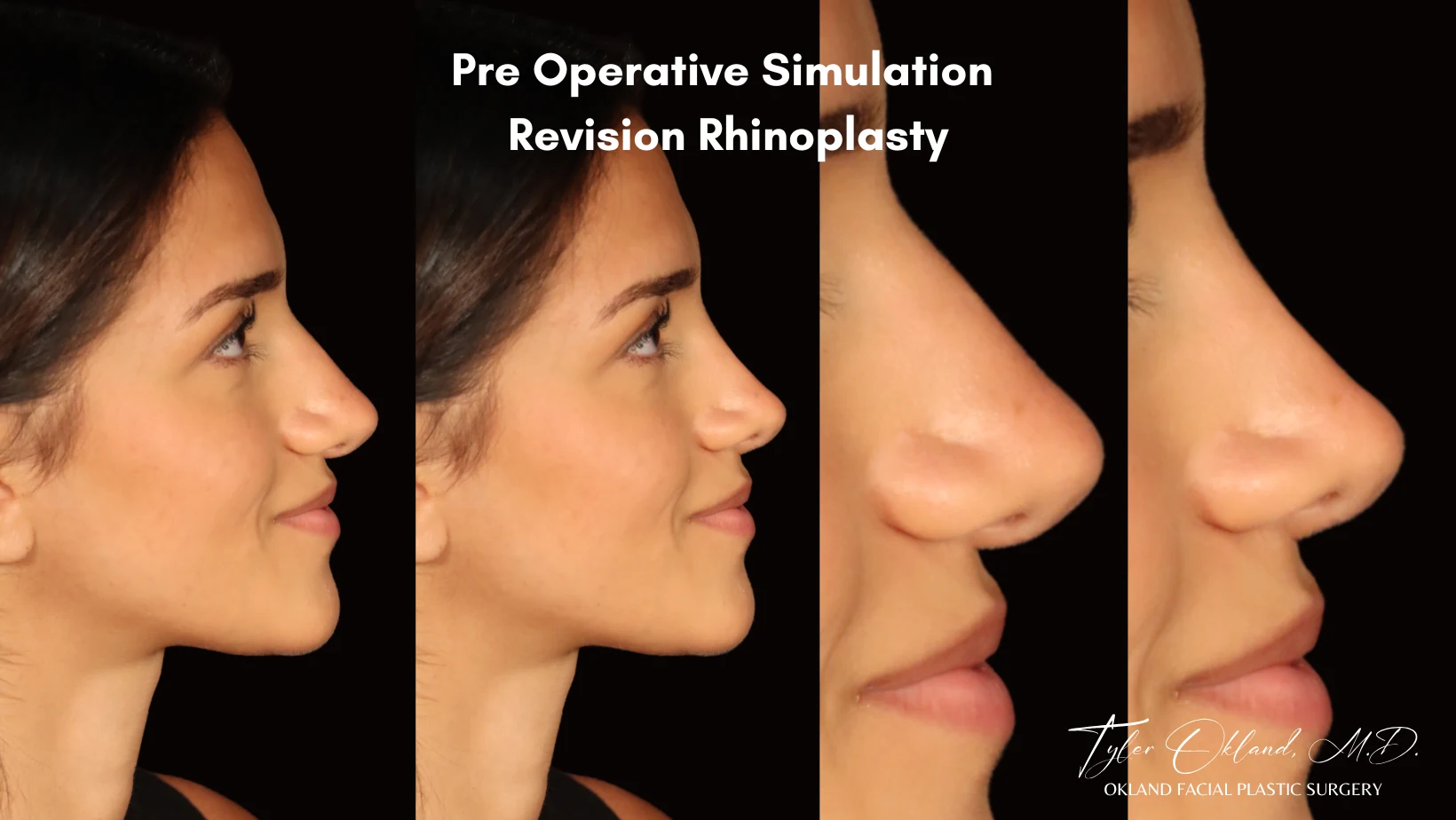
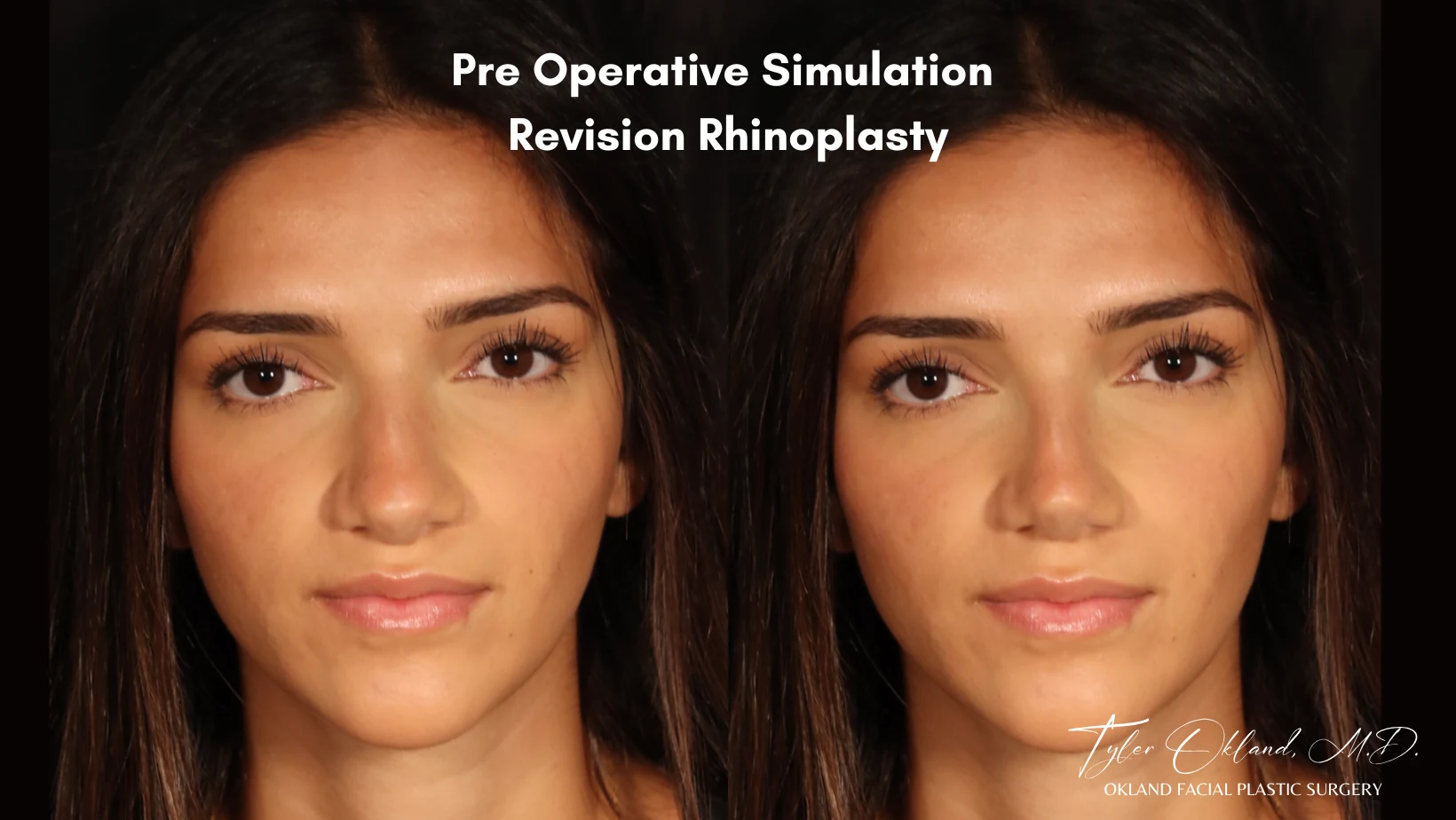
Revision Rhinoplasty by Tyler Okland, MD

Revision Rhinoplasty in Denver, Colorado

Complex structural rhinoplasty for patients seeking meaningful improvement in appearance, support and breathing after previous nasal surgery.

Written and medically reviewed by Tyler Okland, MD, double board-certified facial plastic and reconstructive surgeon. Last medically reviewed August 2026.

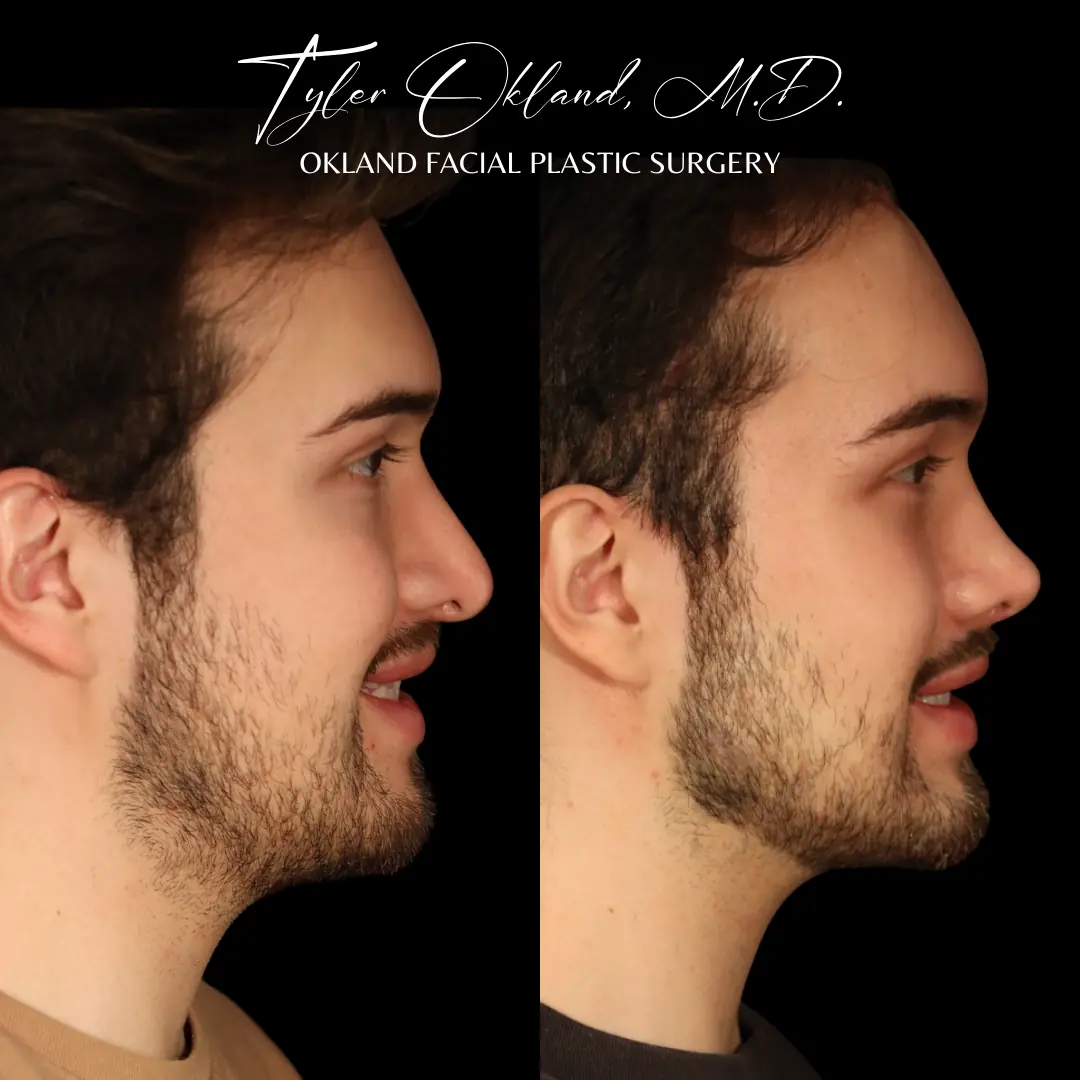
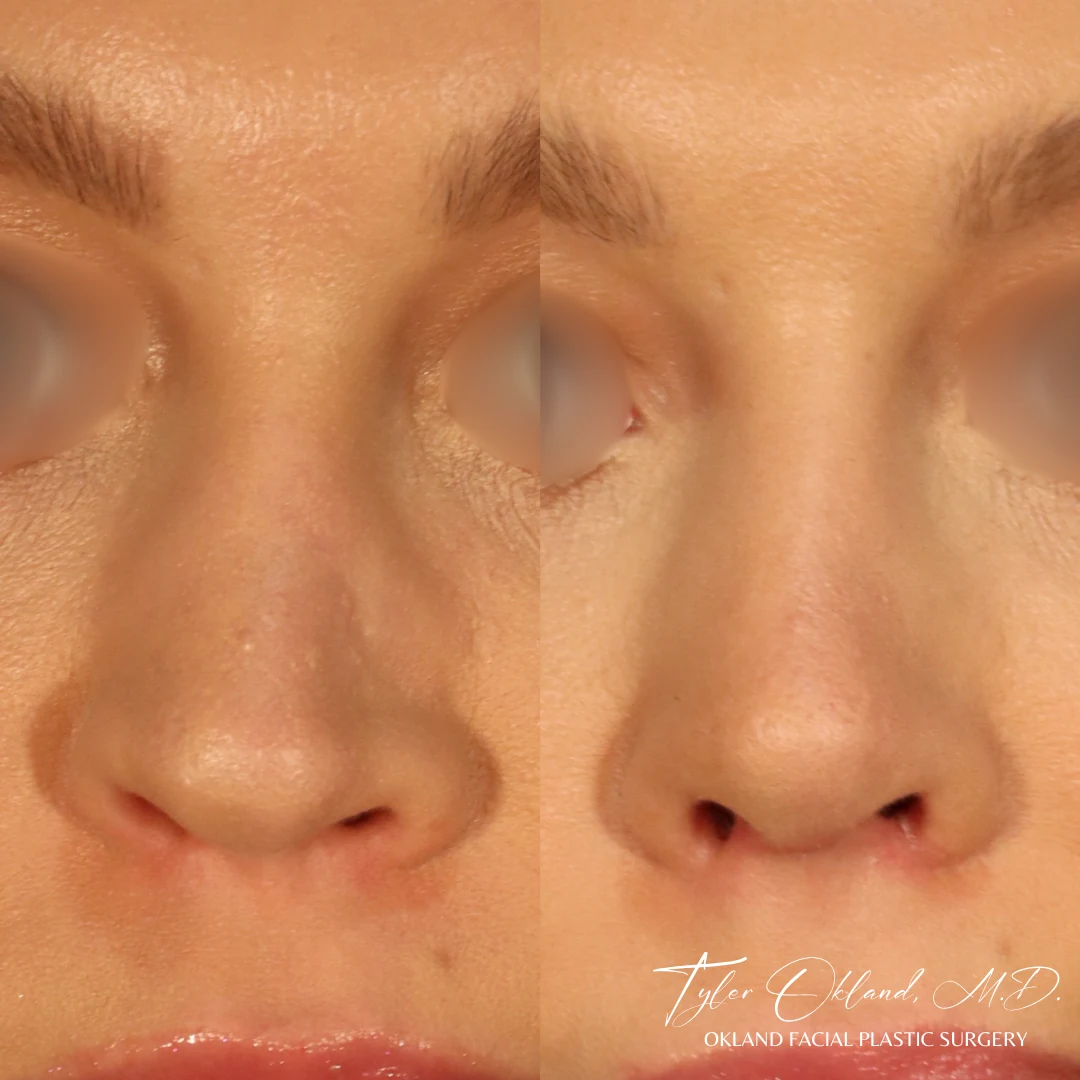
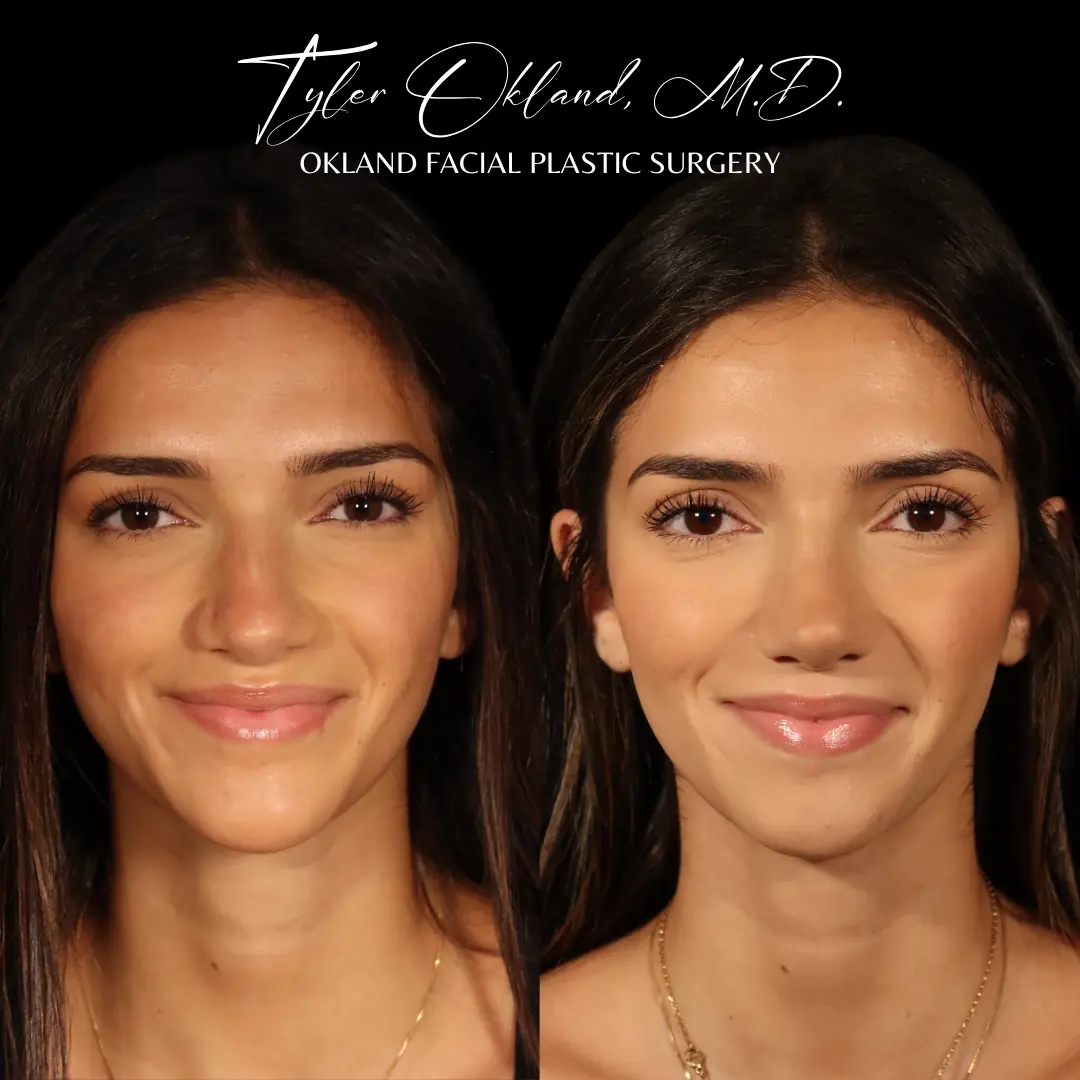
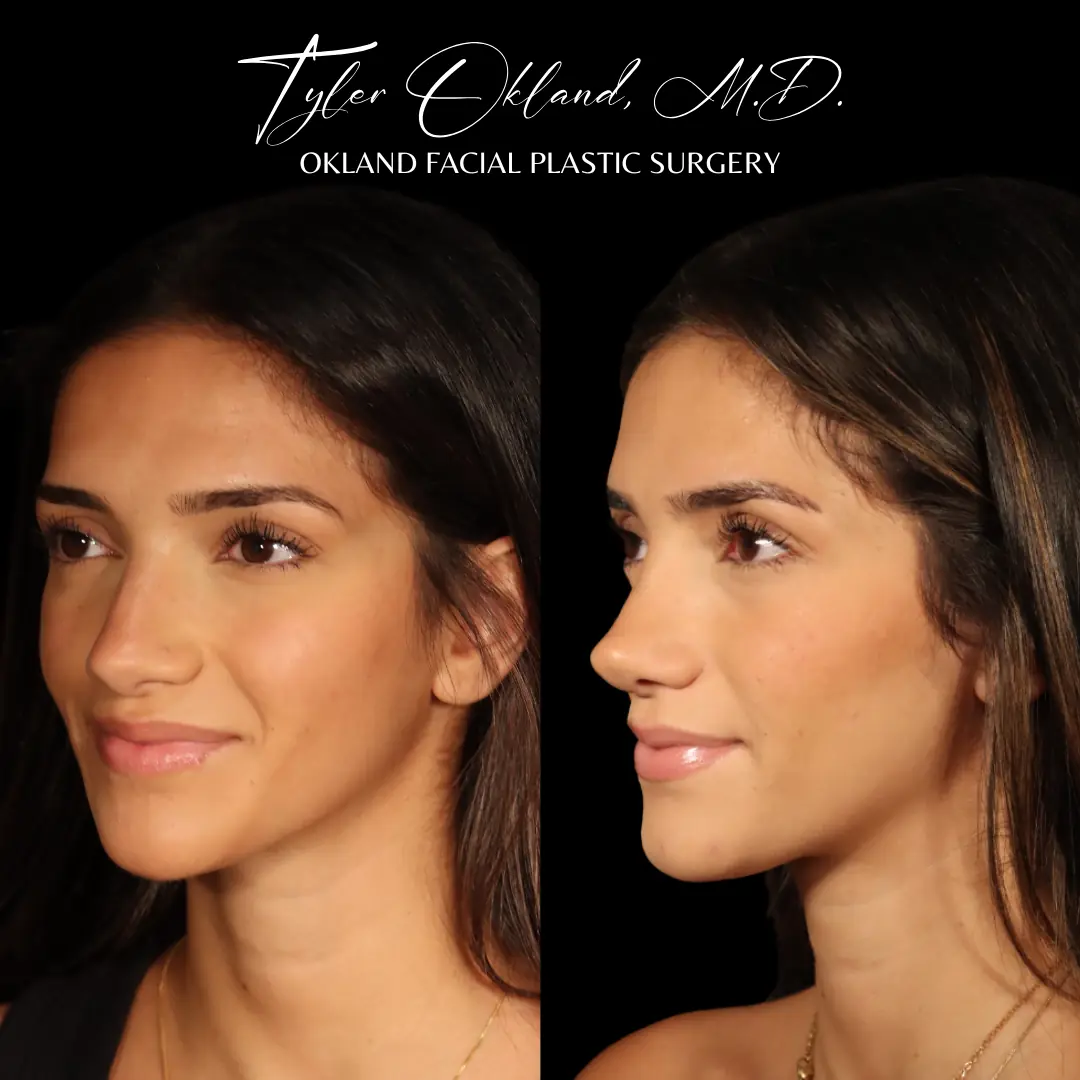
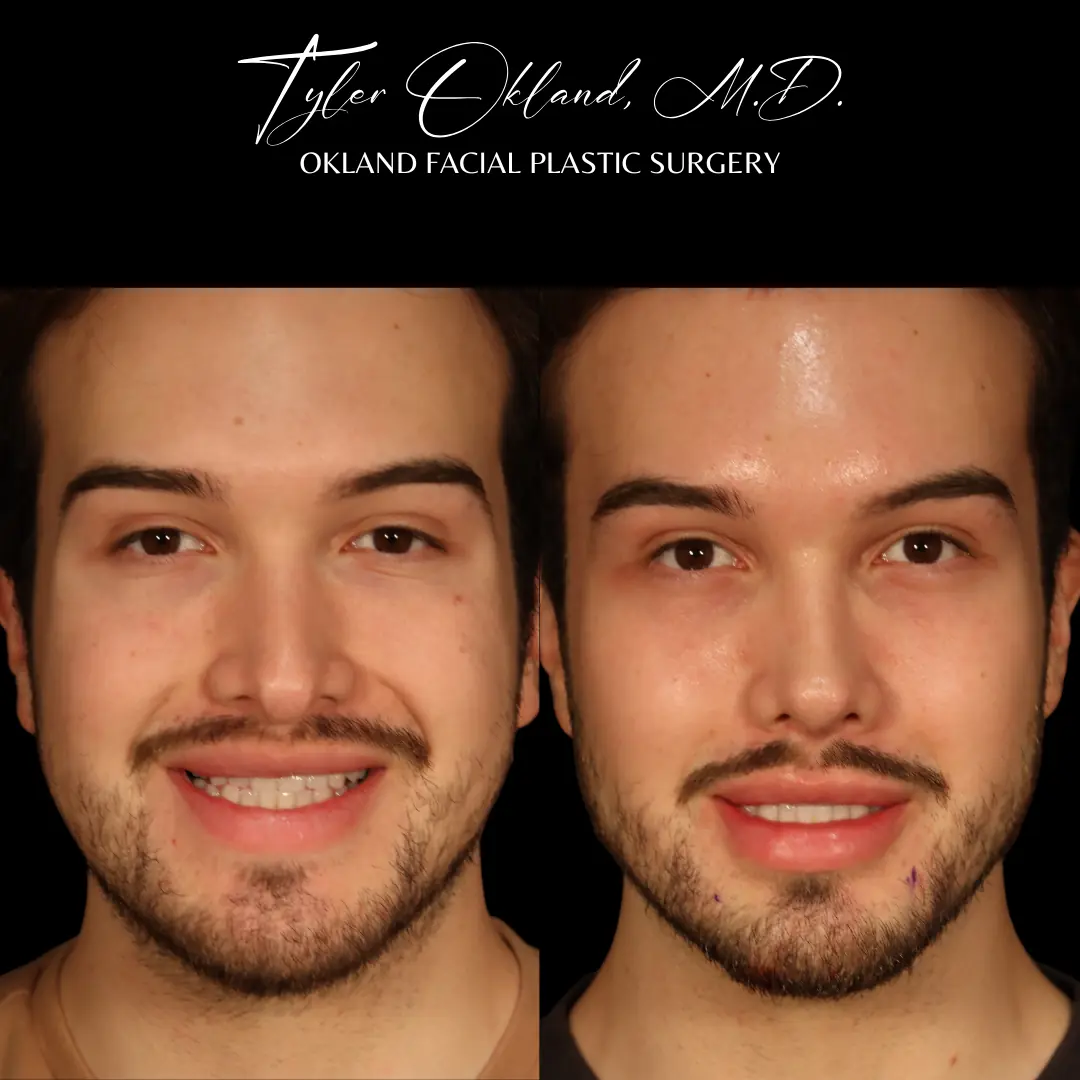
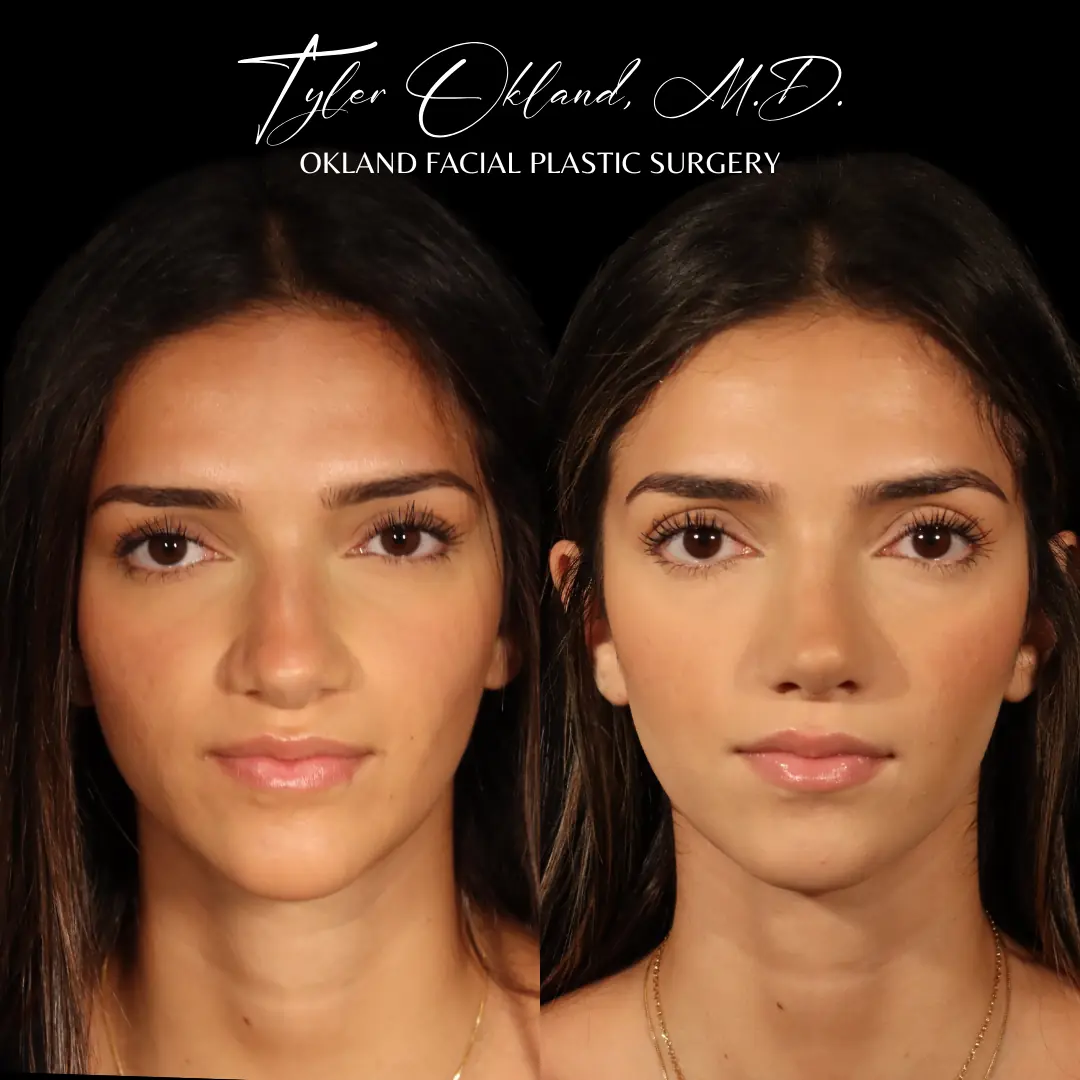
Straight-on before-and-after revision rhinoplasty result by Dr. Tyler Okland in Denver

Revision Rhinoplasty: Two Different Problems, Two Different Reconstructions

The point of these cases is not to show one signature nose. It is to show how different structural problems require different solutions.

This page is specifically about revision rhinoplasty—surgery on a nose that has already been operated on. If you have never had nasal surgery but are interested in it, read about primary rhinoplasty in Denver instead.

Revision Rhinoplasty Is Not Primary Rhinoplasty a Second Time

Revision rhinoplasty is the most difficult elective surgical procedure, period.

In primary rhinoplasty, I begin with anatomy that has never been surgically altered. Tissue planes are recognizable. The cartilage framework is still present. The skin has not contracted around a previous reconstruction. The septum has usually not been harvested. I can evaluate what nature gave you and build from there.

Revision rhinoplasty is fundamentally different.

In primary rhinoplasty, I inherit your anatomy. In revision rhinoplasty, I inherit your anatomy plus every decision, mistake, scar, graft, resection and healing response from every surgeon who came before me.

I inherit cartilage that was removed. I inherit cartilage that was left behind. I inherit permanent sutures, grafts that may have shifted or warped, asymmetric scar contraction, altered blood supply, missing structural support and sometimes anatomy that looks very different from what an old operative report suggests.

And then I have to build a better nose from what remains.

That is why I do not think of revision rhinoplasty as another nose job. It is reconstructive surgery performed in millimeters on previously operated tissue, with the simultaneous goal of making the nose look more natural, function better and fit the face.

02Diagnosis

What Revision Rhinoplasty Can Address

Some revisions are limited. Others require major reconstruction. I commonly evaluate persistent or recurrent deviation; a bridge that remains crooked, over-resected, scooped or irregular; middle-vault collapse or an inverted-V deformity; and a tip that is pinched, asymmetric, poorly supported, over- or under-rotated, or incorrectly projected.

Other concerns include visible or displaced prior grafts, pollybeak or supratip fullness, alar retraction, nostril asymmetry, a hanging or retracted columella, nasal-valve collapse, persistent septal deviation or perforation, and breathing that remains obstructed or has worsened after surgery. Thin skin may reveal every contour; thick scar can distort the envelope over it.

In Revision Rhinoplasty, the Diagnosis Matters More Than the Complaint

A crooked bridge may be the result of missing structural support. A pinched tip may reflect excessive cartilage removal. Nostril asymmetry may be driven by scar contracture rather than the nostril itself. Before I decide how to change the nose, I need to understand why it looks and functions the way it does now. The operation is built from that diagnosis.

In many ways, rhinoplasty is closer to architecture than medicine. The nose is a small three-dimensional structure in which every component affects the others. The septum acts like a central support beam. The bridge, midvault and tip depend on an underlying framework to maintain shape, position and airway function. If that framework has been weakened, removed or rebuilt incorrectly during a previous operation, simply reshaping what is visible does not solve the problem.

Revision rhinoplasty therefore often requires me to work backward: identify where the structure failed, determine what support is missing, and rebuild the framework before worrying about the final millimeters of refinement.

A beautiful revision result must be engineered before it can be refined.

CASE PROOF A

What Looked Too Wide Was Actually Too Weak

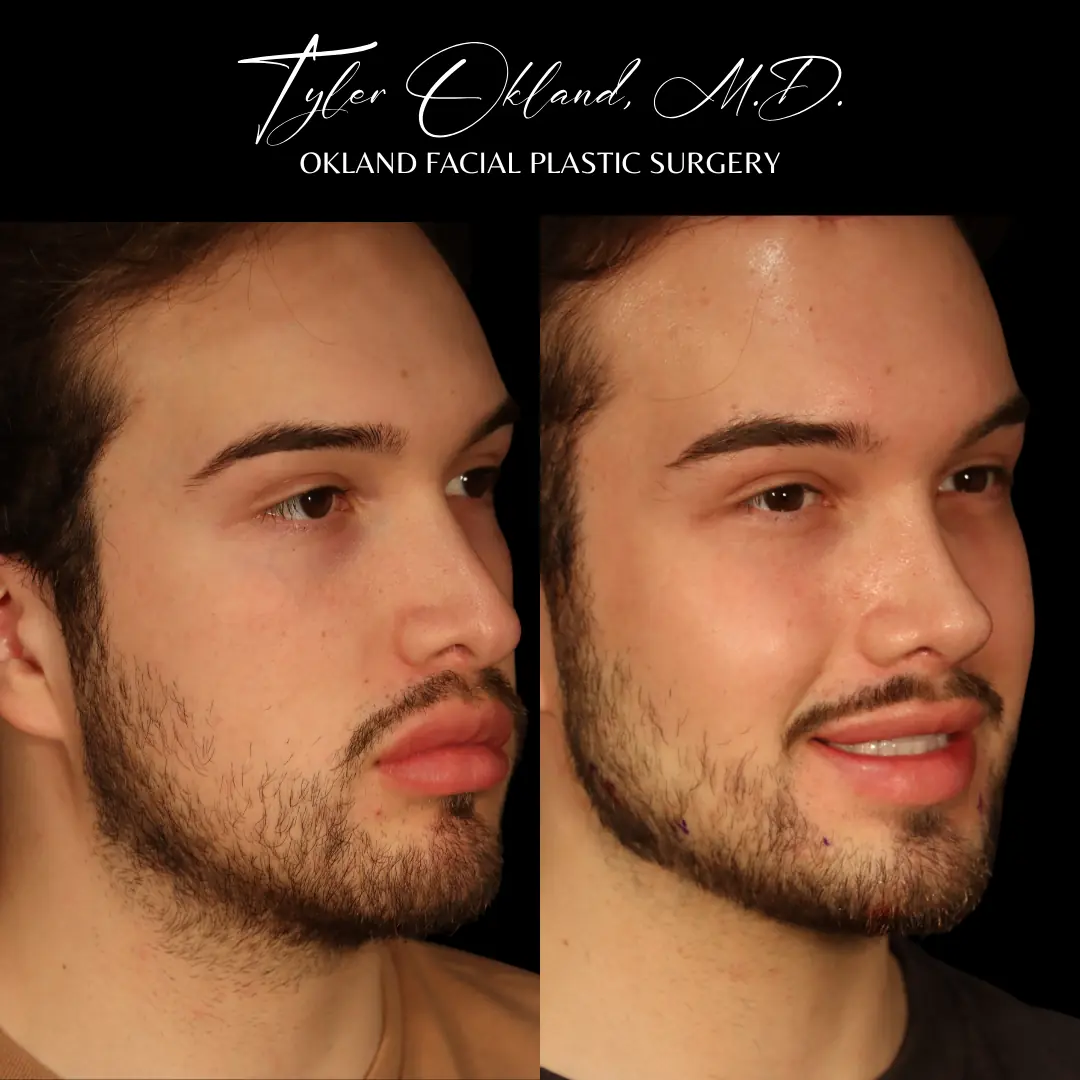
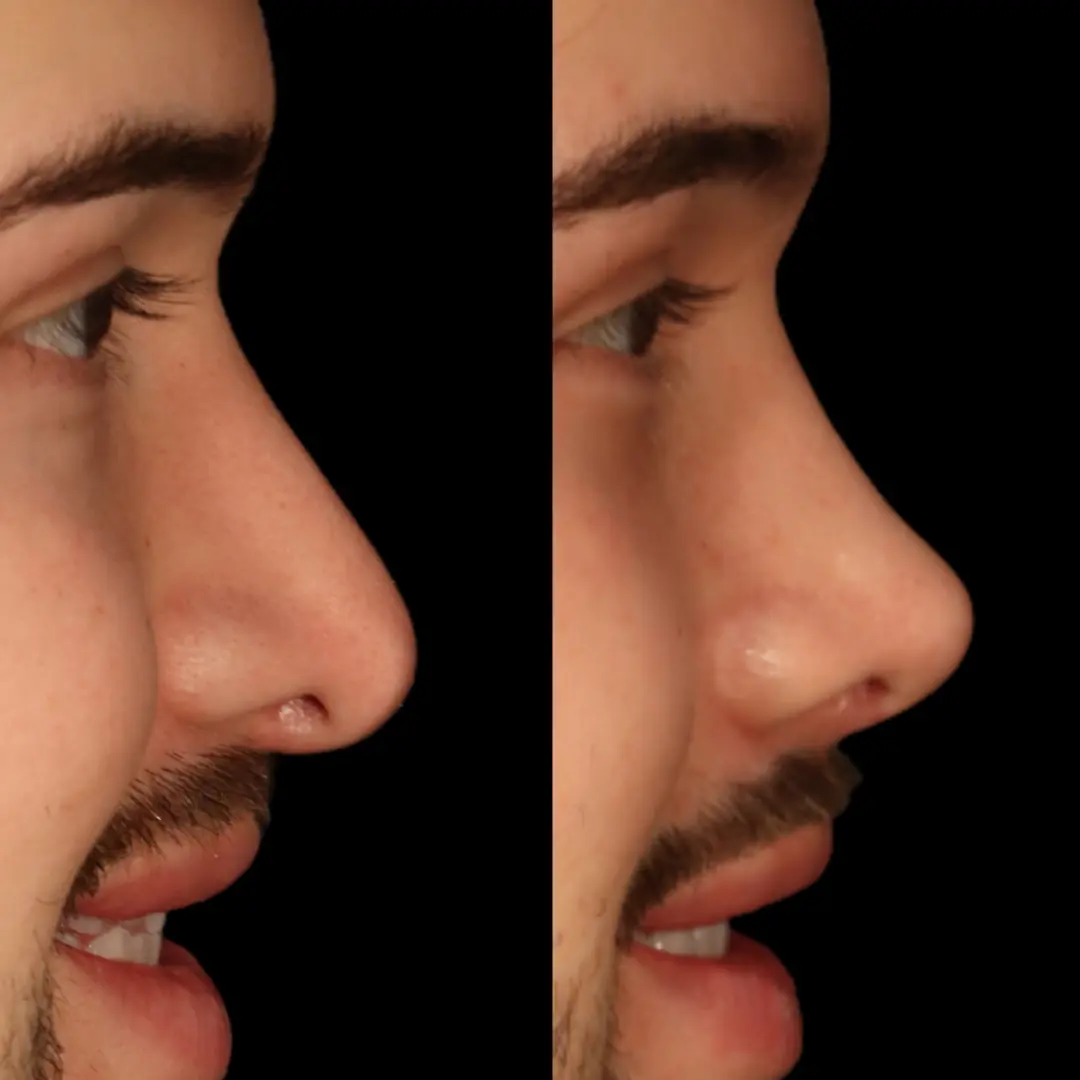
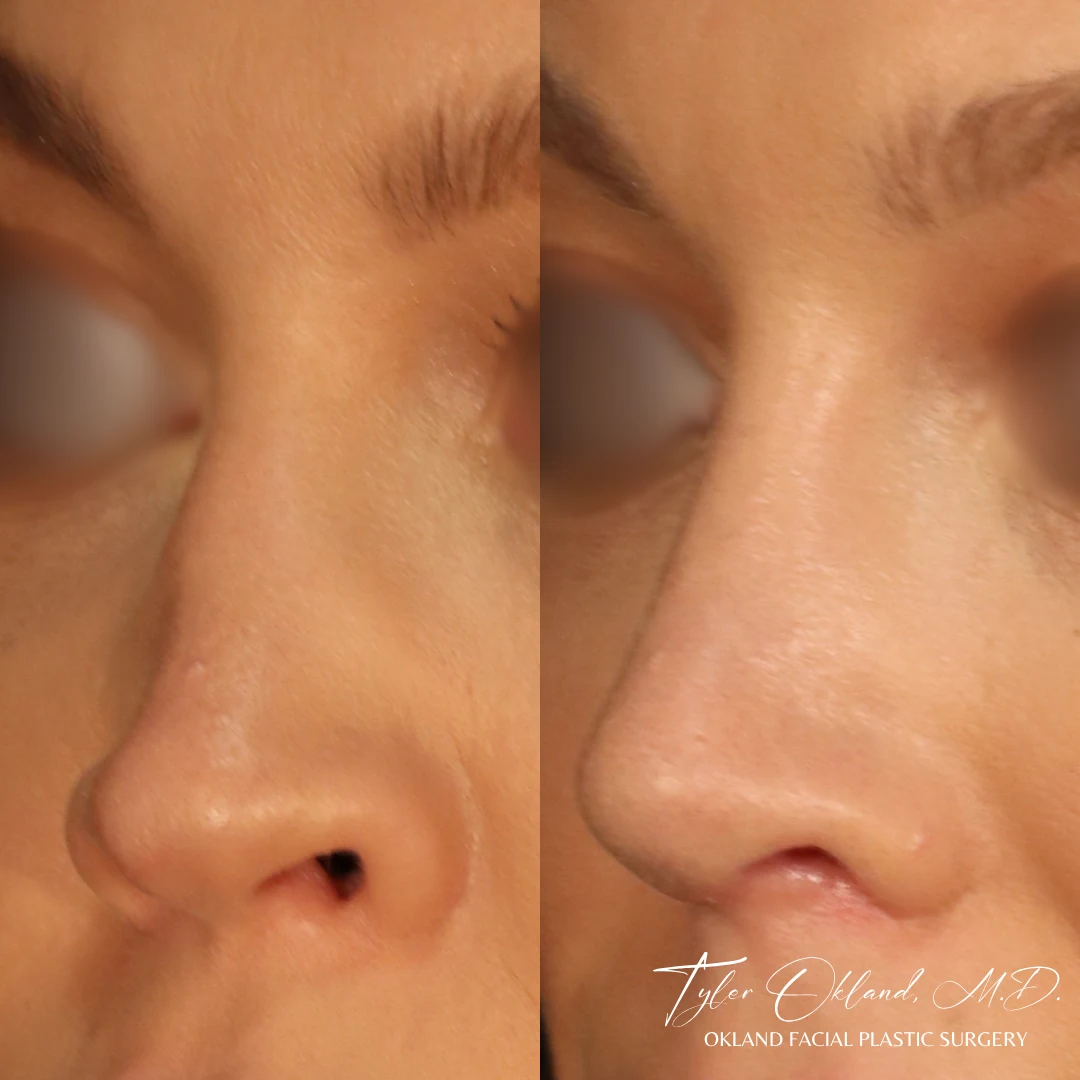
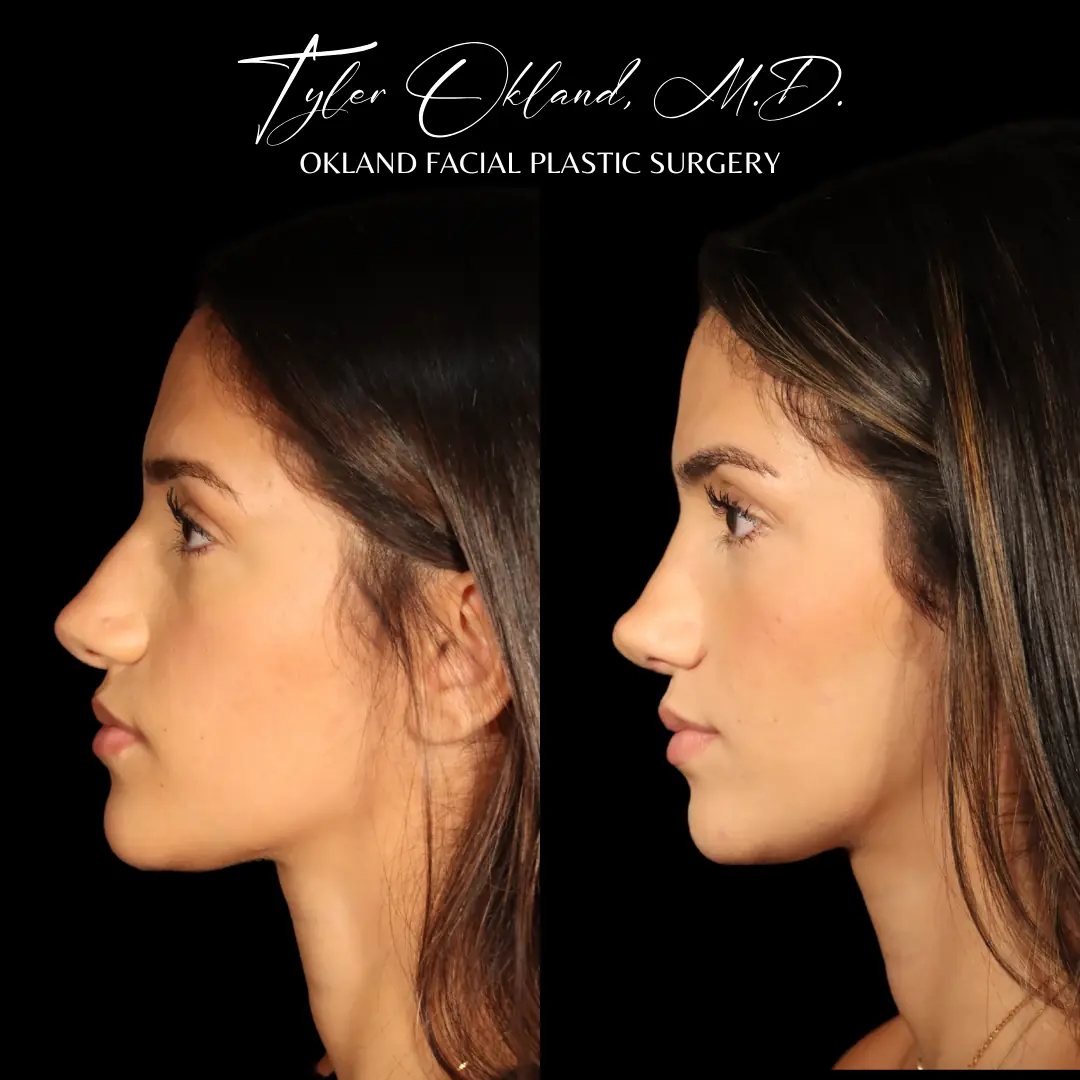
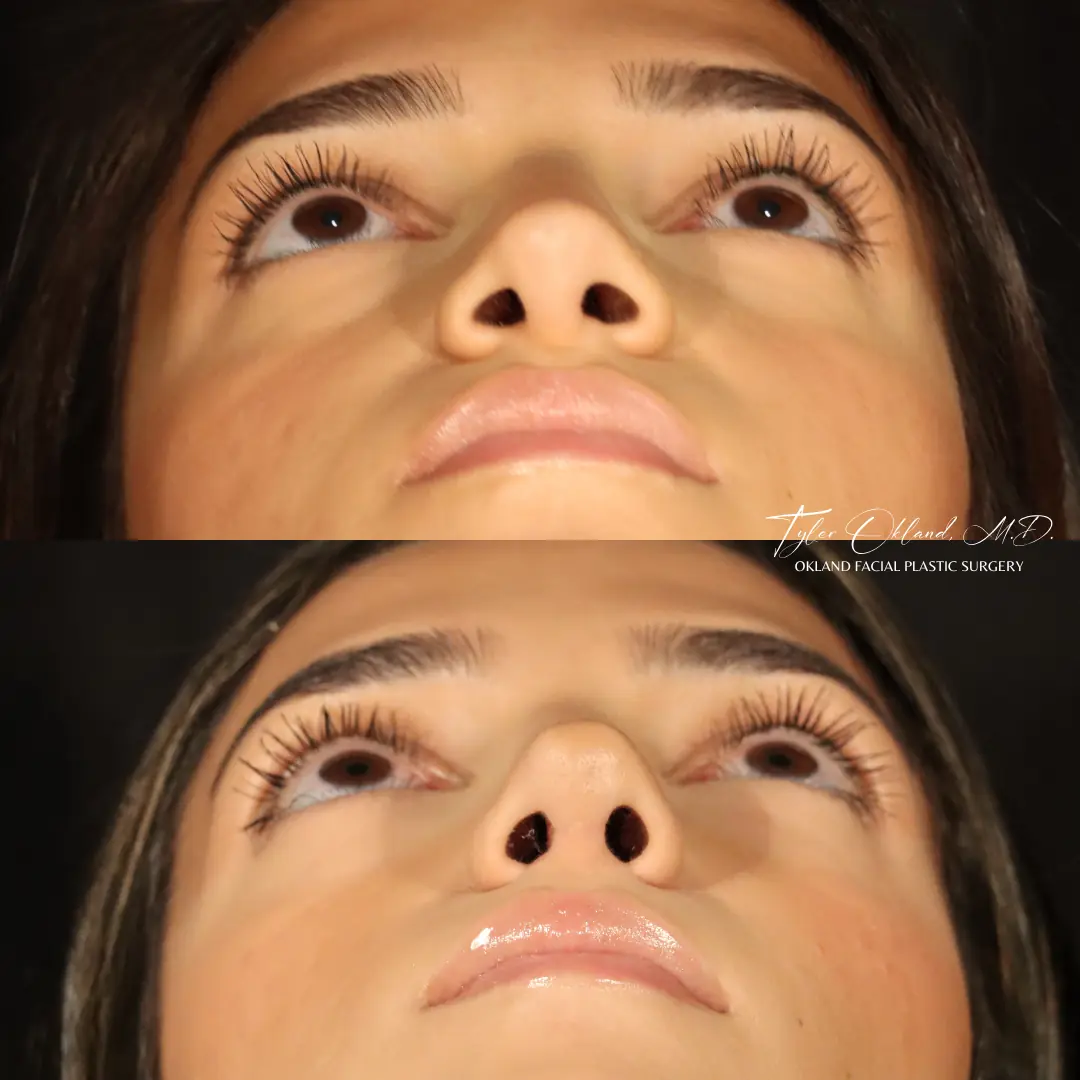
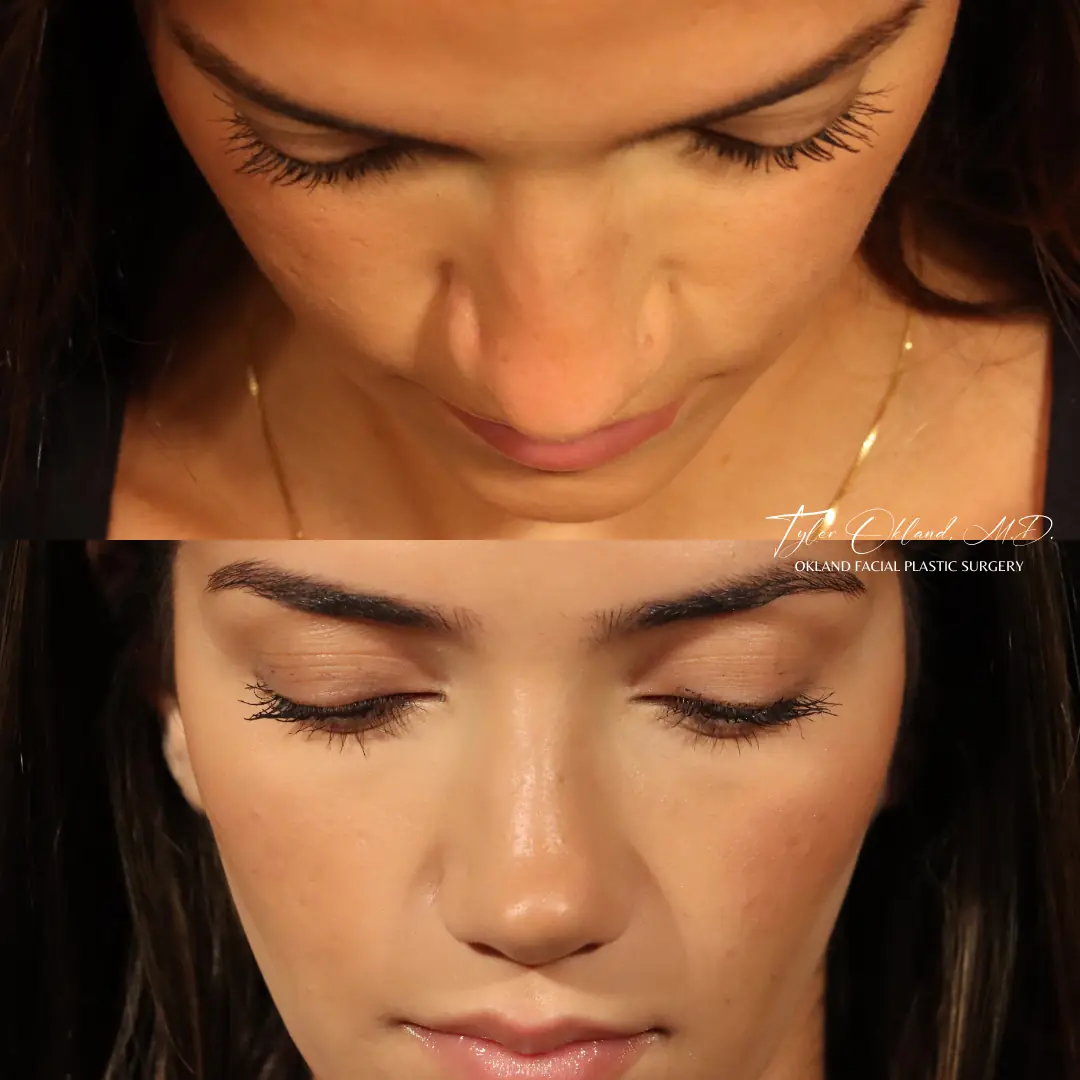
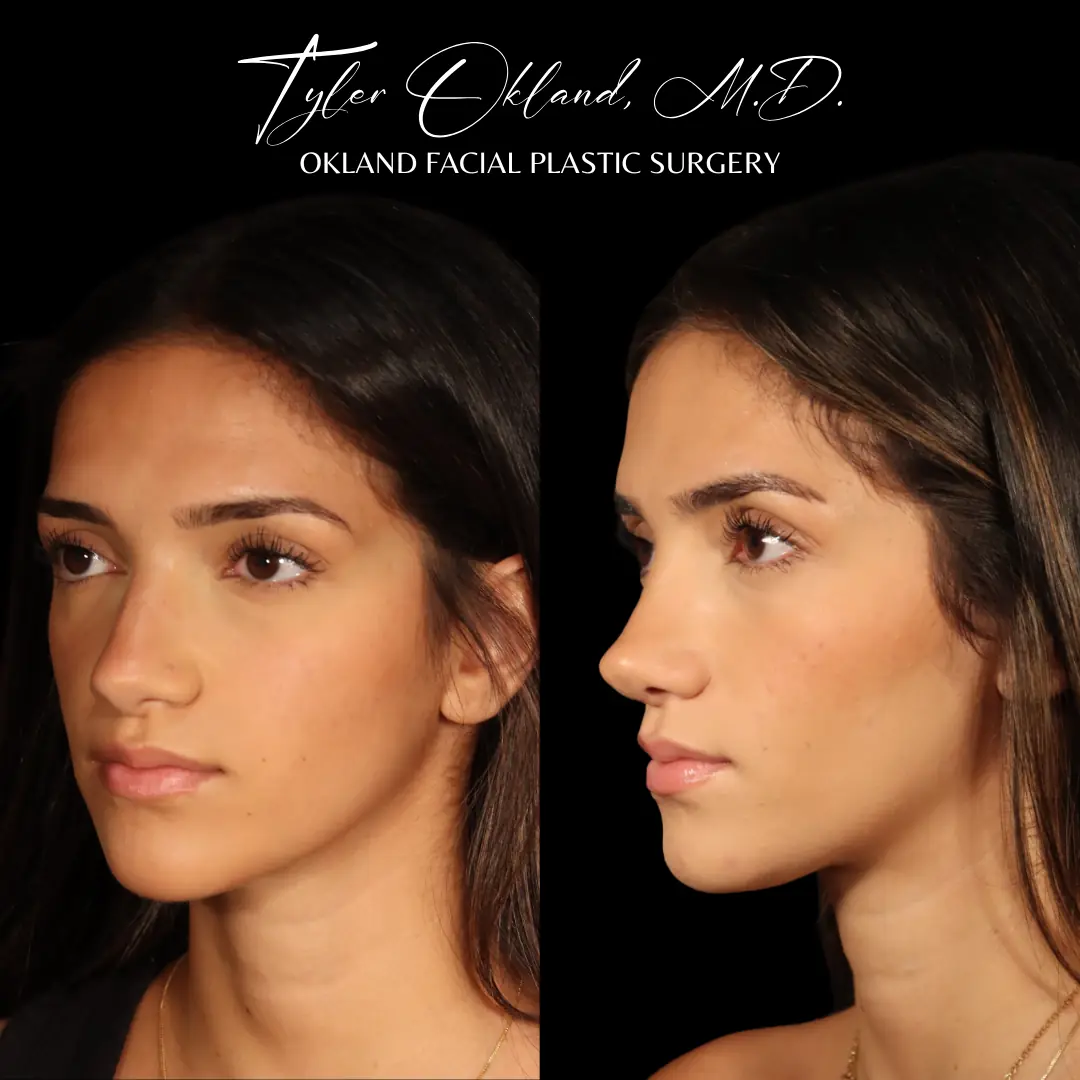
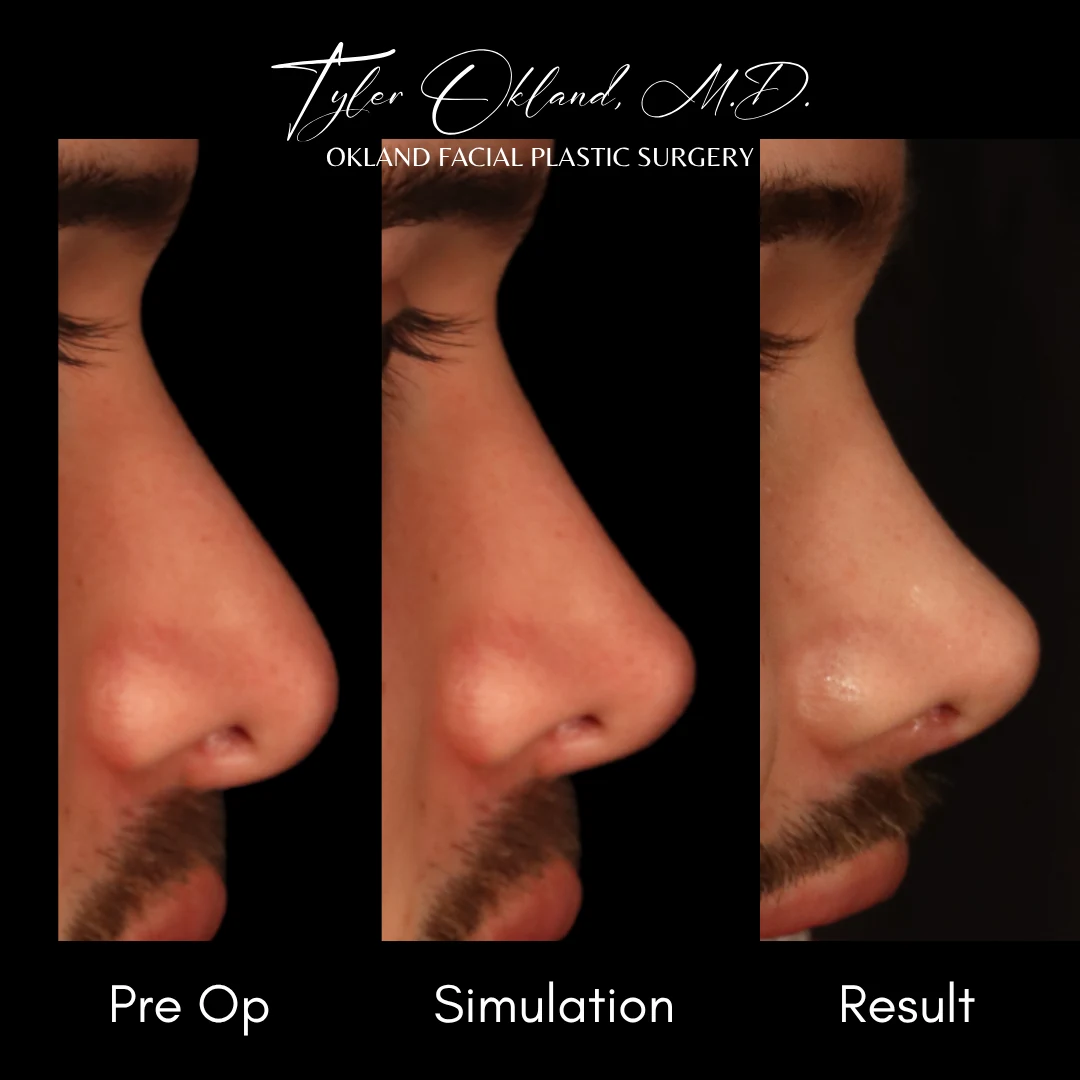
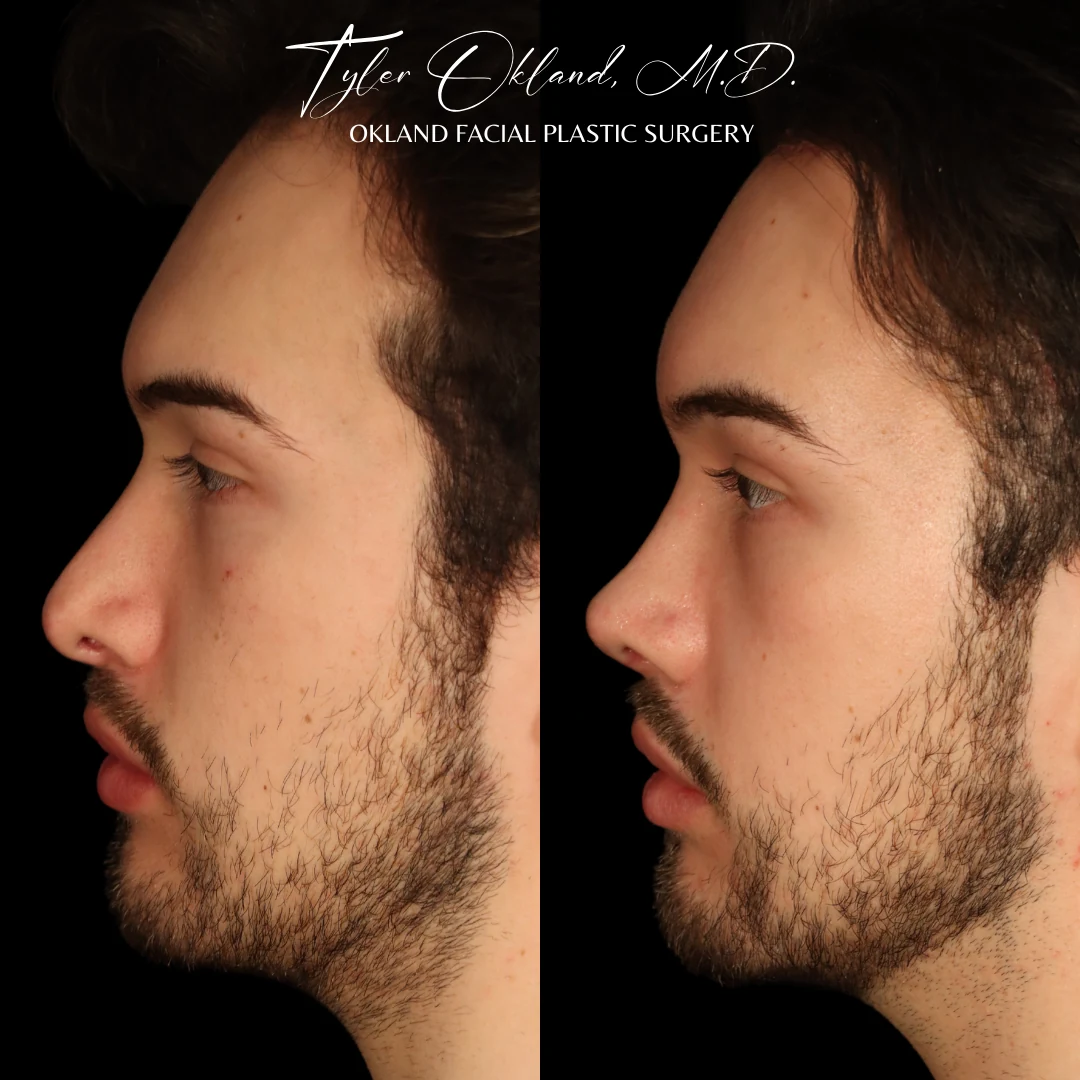
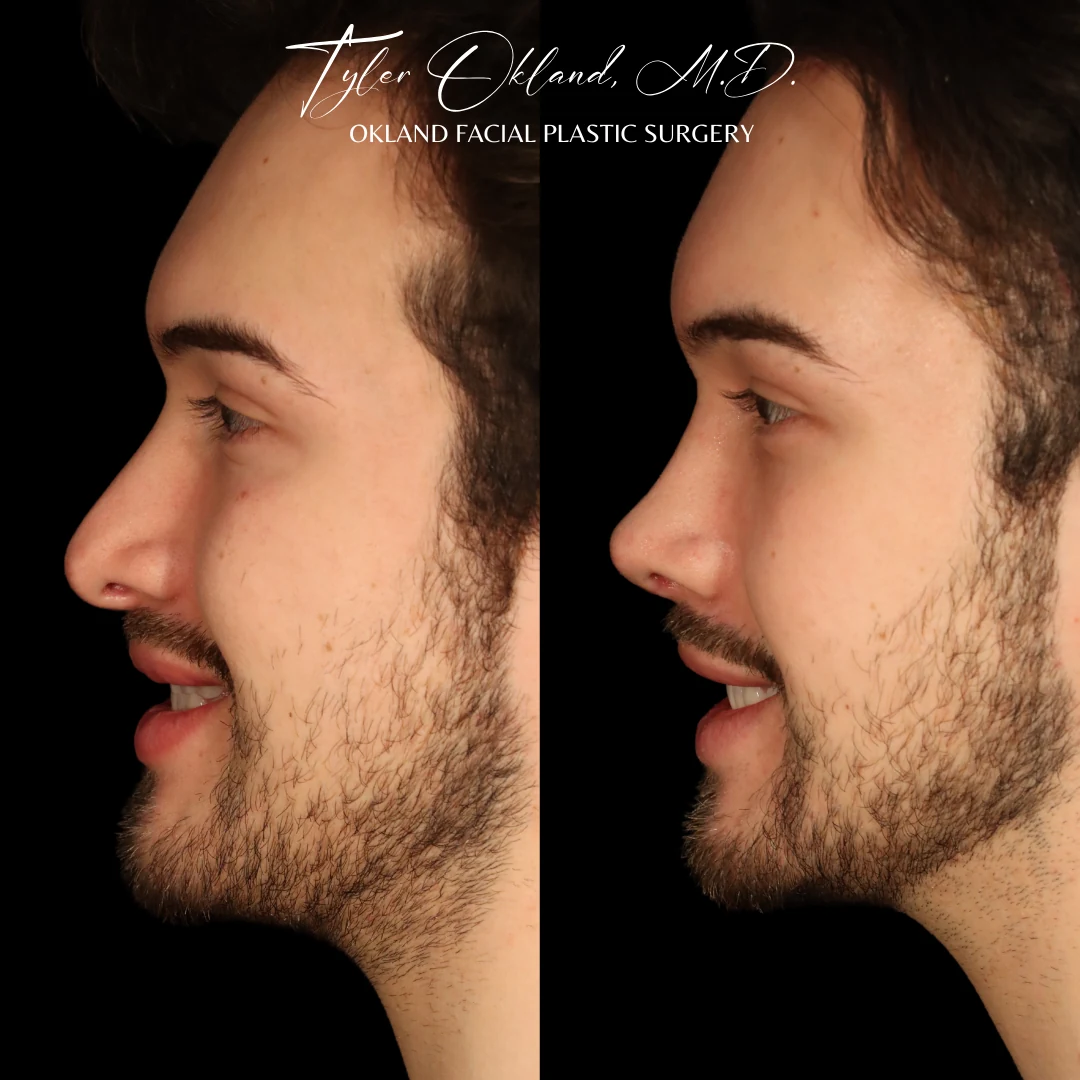
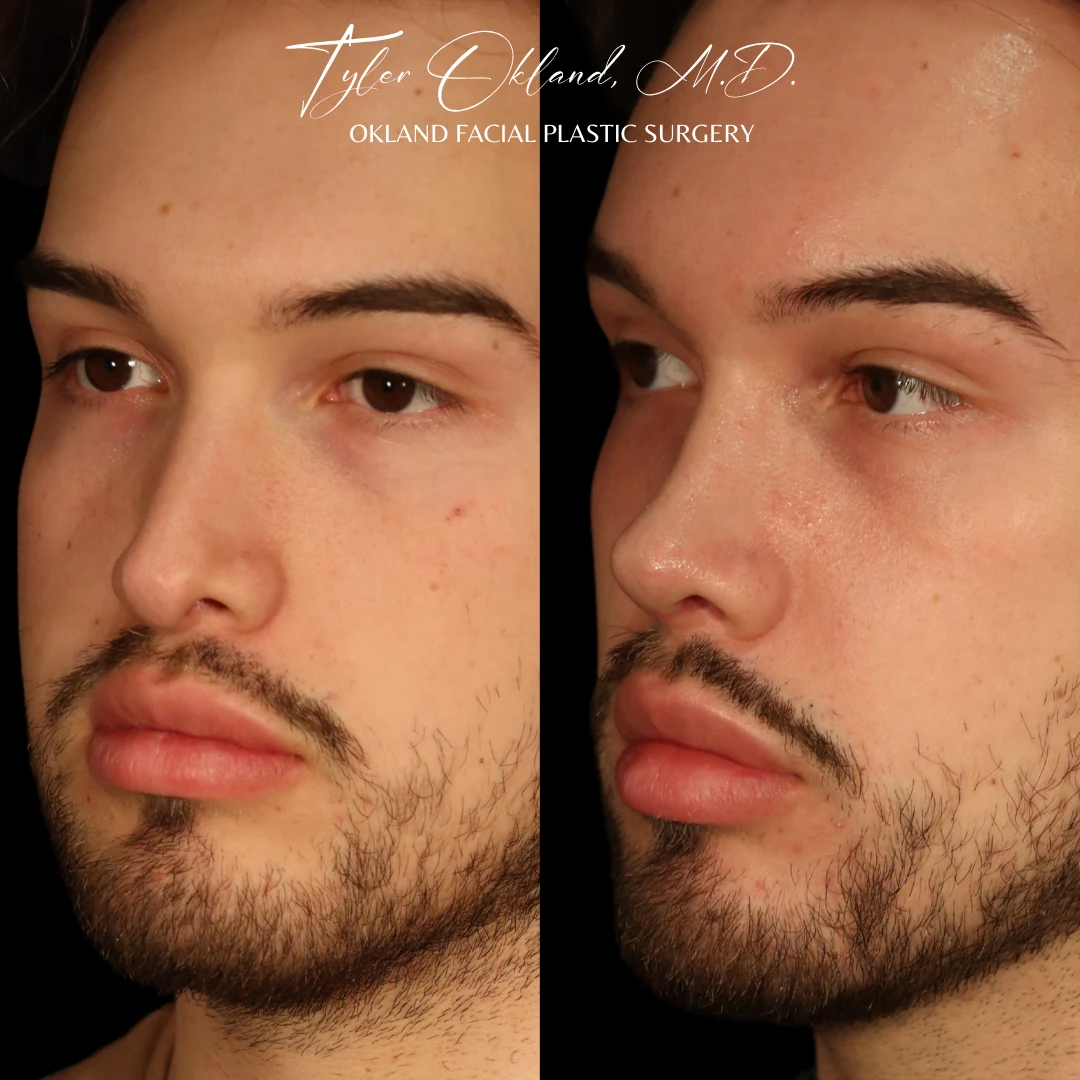
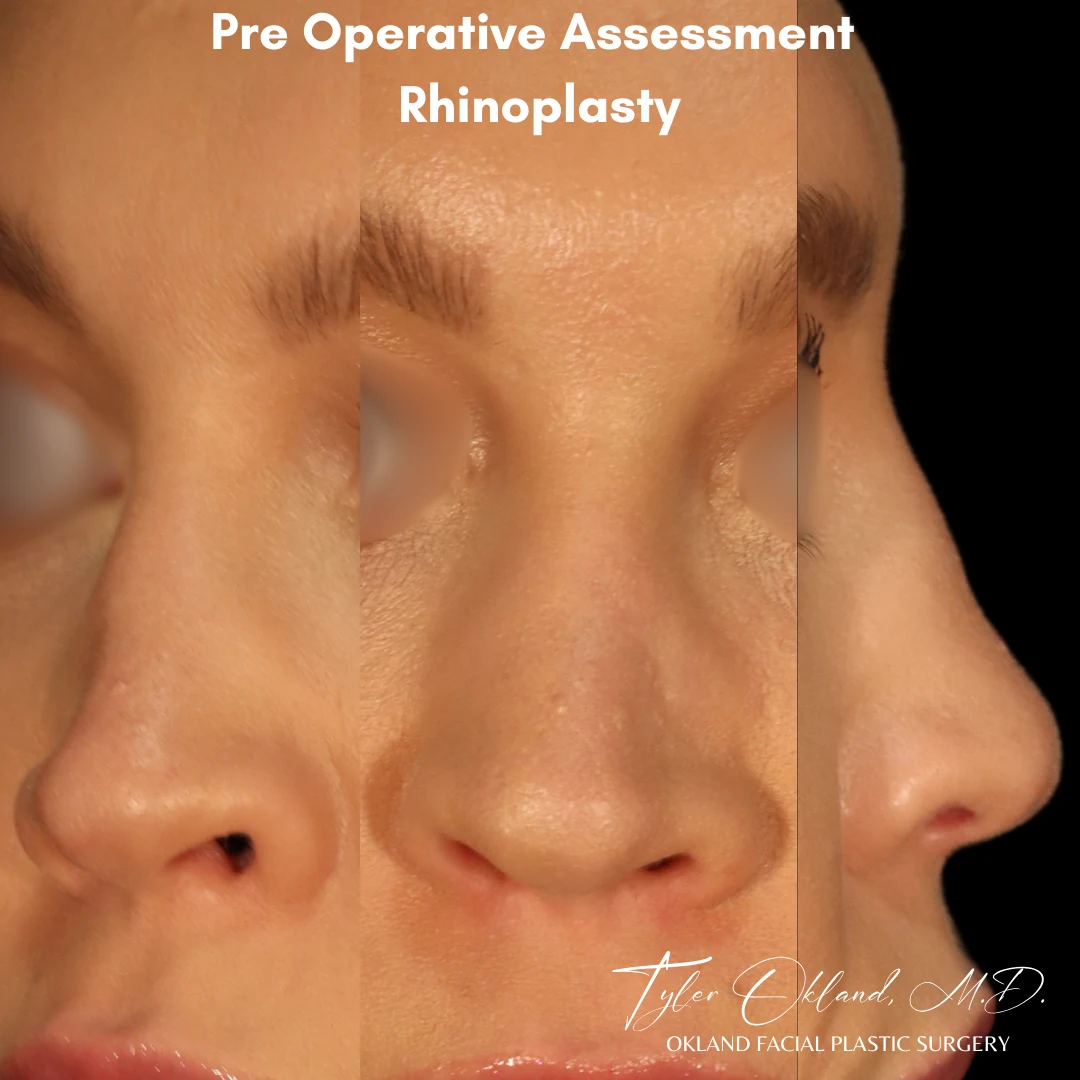
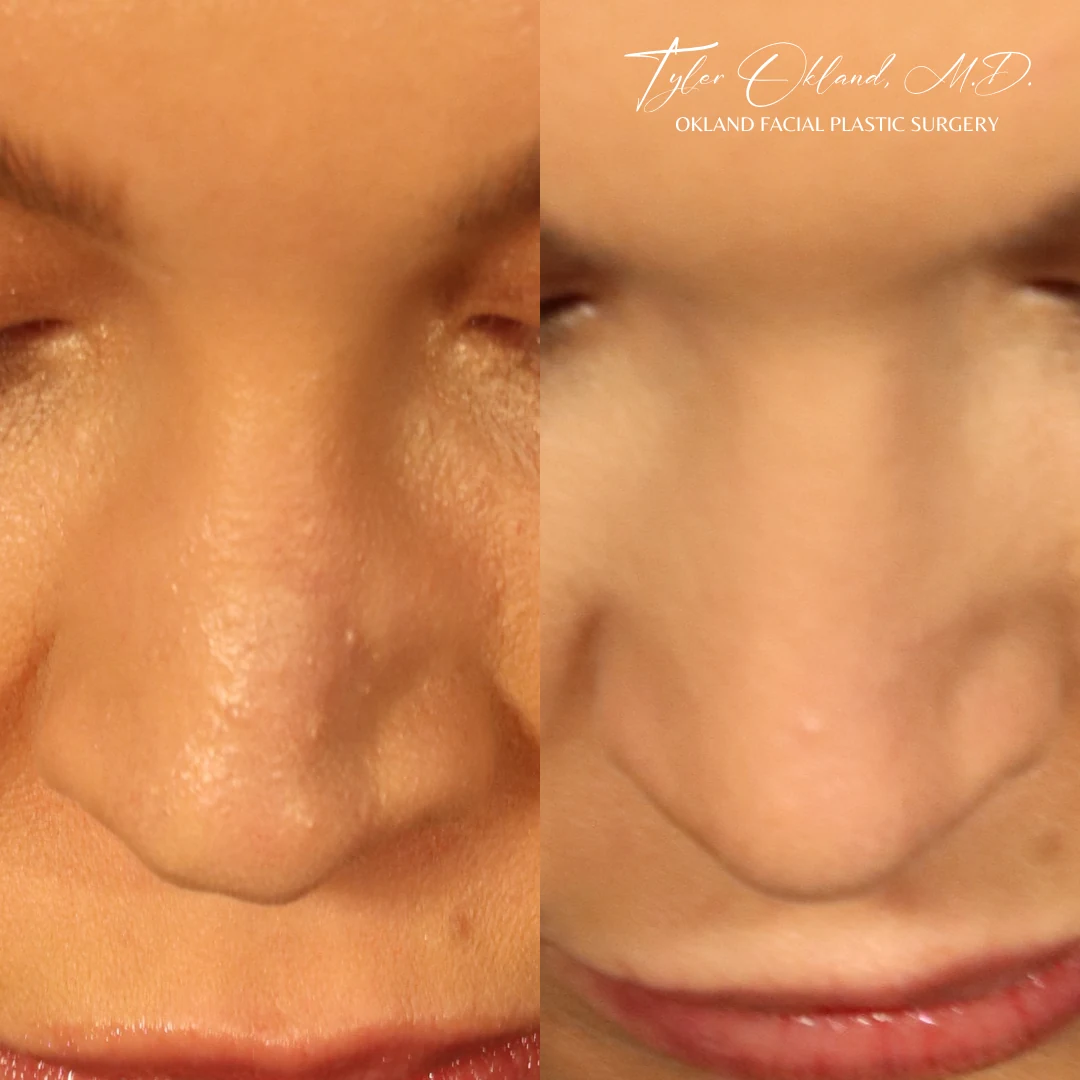
After a prior open septorhinoplasty, this patient had severe tip weakness, an inverted-V deformity, alar retraction, valve collapse and wide-appearing nostrils. I did not perform alar-base reductions. Once the collapsed central architecture was restored with a strategically placed 9 × 9 mm piece of remaining septal cartilage, the nostrils narrowed with it. The diagnosis—not the complaint—determined the operation.

Sometimes the feature that appears too wide is not the structure that needs to be made smaller. Sometimes it needs to be better supported.
03Improvement, Not Perfection

Improvement, Not Perfection — and Why I Grade Revision Differently

The goal of rhinoplasty is improvement, not perfection.

That is true whether I am performing your first rhinoplasty or your fourth. But I judge improvement more harshly in primary rhinoplasty than I do after a nose has already been operated on.

Primary Rhinoplasty Can Be an Operation of Optimization

Some of my primary rhinoplasty patients already have attractive noses. They may want a bridge slightly straighter, a tip slightly more refined, a small change in rotation or a modest improvement in symmetry. I think of these as “optimization rhinoplasties.”

The starting point is already good. The tissue is untouched. The anatomy is predictable. And because the requested gain is small, the margin for error is razor thin.

If I take an attractive, unoperated nose into the operating room to make subtle improvements, I hold that result to an extraordinarily high standard. The operation has to make a good nose better.

Revision Rhinoplasty Uses a Different Decision Threshold

Revision surgery does not deserve a lower technical standard. It deserves a different threshold for deciding whether another operation is justified.

Once a nose has been operated on, the question is no longer simply whether I can improve one visible detail. The question is whether I can create a meaningful net improvement without spending more than we gain.

If the nose is substantially improved relative to the result of the previous rhinoplasty, there needs to be a very good reason to go back in.

A small imperfection with a large surgical solution is usually a bad trade.

A mildly asymmetric bridge may be technically improvable. But if correcting that asymmetry requires reopening scarred planes, dissecting around a reconstructed tip, manipulating prior grafts and asking the skin envelope to heal again, the operation may create new costs elsewhere.

Maybe the bridge becomes more symmetric, but the tip heals with less definition. Maybe the tip improves, but a new graft becomes palpable. Maybe one nostril becomes more even, but scar contraction changes another contour. The original problem may be better while the nose acquires a new problem.

That is what I mean by trading problems.

As the nose improves, the decision to operate again becomes more nuanced. My job is to weigh the potential gain against the structures we must disturb and recommend surgery only when I believe the nose can be made meaningfully better overall.

THE QUESTION I ASK BEFORE A RE-REVISION

What are we realistically gaining, how noticeable is the remaining problem in normal life, what structures must be disturbed to change it, and what might we lose in exchange?
Why Revision Rhinoplasty Is Harder

1. Scar Replaces Normal Anatomy

In a primary rhinoplasty, I can usually identify the expected anatomical planes. In revision surgery, scar can fuse those planes together. Separating skin, muscle, cartilage, grafts and scar becomes slower and more deliberate, and the final anatomy may not become completely clear until the nose is open.

2. The Cartilage I Want May Already Be Gone

Septal cartilage is my preferred and safest structural graft material. Unfortunately, many revision patients arrive after a previous septoplasty or rhinoplasty in which much of the usable septum has already been removed. I therefore need a primary cartilage plan and a backup cartilage plan before the operation begins.

3. The Skin Envelope Has Already Healed Around Another Framework

Some revision patients have thick, stiff scar tissue that resists redraping. Others have extremely thin skin that reveals every millimeter of the underlying framework. A structurally excellent reconstruction can still look imperfect if the skin cannot drape smoothly over it.

4. Blood Supply Has Been Altered

Previous incisions and dissections change vascular pathways. Most revision noses heal normally, but repeated surgery requires more respect for tissue handling, dissection and skin viability. This is especially relevant for patients with previous or current nostril narrowing or lip lift surgery.

In fact, I refuse to perform lip lift with revision rhinoplasty concurrently, because I worry about impairing blood supply to the nose (and the new grafts I secured there).

5. The Nose May Be Both Aesthetically and Functionally Compromised

Many revision patients do not have an isolated cosmetic concern. They may also have internal-valve collapse, external-valve weakness, septal problems or airway narrowing. Published specialty-center data show that aesthetic and functional problems commonly coexist in revision patients. [1]

6. Biology Has Already Shown Me How It Wants to Heal

If one side scarred harder, a nostril contracted, or a tip lost definition after the previous operation, I have to treat that history as information. Revision planning is not just anatomy. It is anatomy plus observed biology.

04Consultation

My Revision Rhinoplasty Consultation

Revision consultation is a reconstruction of history before it becomes a reconstruction of anatomy. You should leave knowing what I believe happened, what can realistically improve, what material I may need, what the backup plan is and what I would intentionally leave alone.

Bring Photographs From Before Your First Rhinoplasty

Old photographs are enormously useful. I want to know what your original bridge, tip, nostrils and facial balance looked like before any surgeon altered them.

Bring Operative Reports When You Have Them

Operative reports can tell me whether your previous surgeon documented septoplasty, spreader grafts, septal extension grafting, columellar struts, osteotomies, alar-base surgery, ear or rib grafting, permanent sutures or other structural work.

But I do not build the plan around the assumption that the operative report perfectly predicts what I will find. Many operative reports are templated or do not perfectly match the anatomy I ultimately find. In revision surgery, the anatomy I encounter is the final authority.

I Evaluate the Entire Nose, Not the Complaint in Isolation

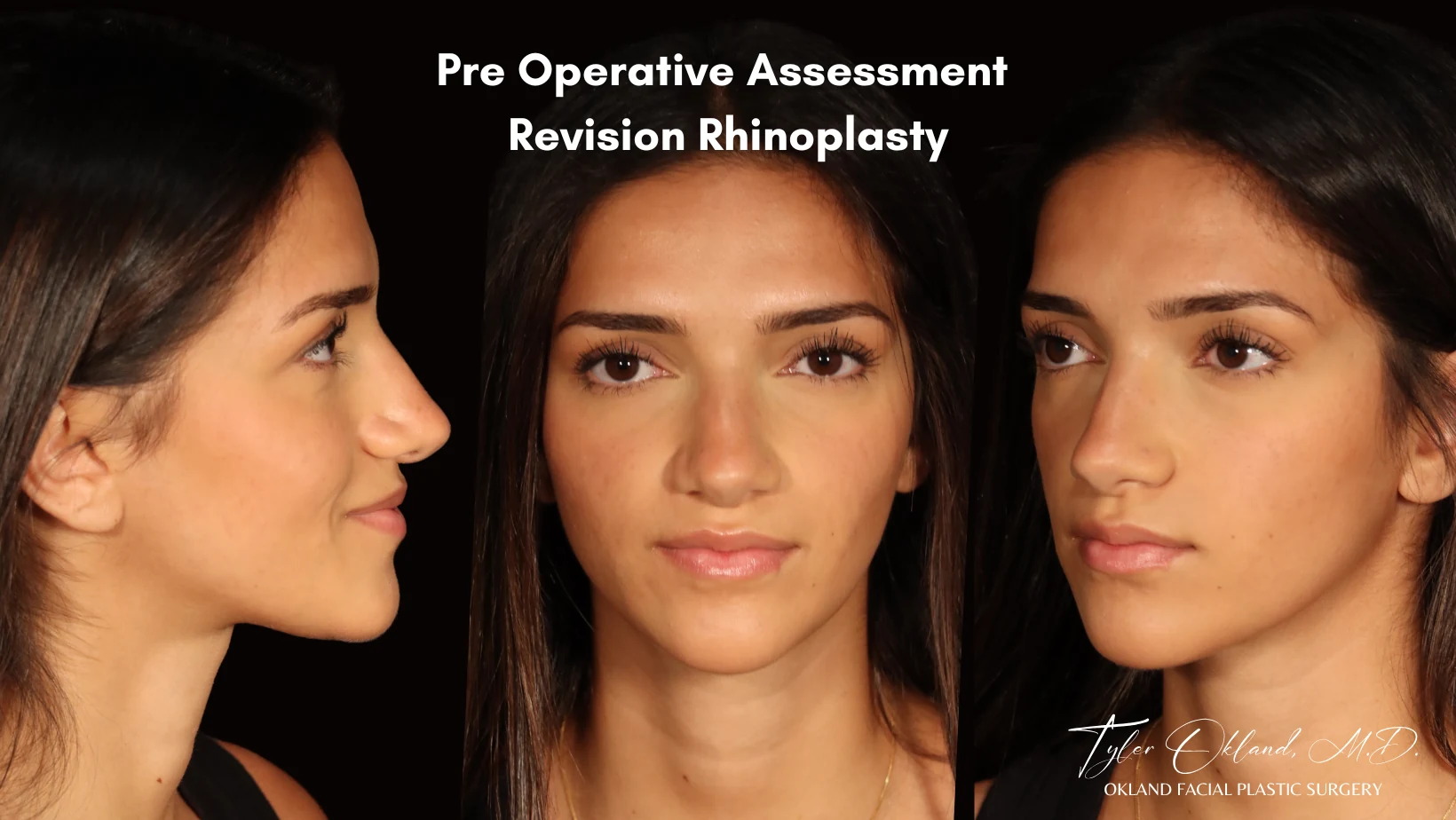
I assess the face first, then the nose from frontal, profile and three-quarter views. I evaluate tip support, skin thickness, scar behavior, nostril shape, dorsal aesthetic lines, septal support, internal and external nasal valves, turbinates and dynamic breathing. I assess for septal perforations or warped grafts.

Just as in primary rhinoplasty, form and function are not separate operations in my practice. A revision nose should not simply look better. It should be structurally open, strong and supported.

05Reconstruction

Reconstruct Before You Refine

Many difficult revision noses are the downstream consequence of subtraction.

Too much bridge was removed. Too much tip cartilage was weakened. The middle vault was narrowed without enough support. A nose that looked small and refined early eventually became pinched, asymmetric or obstructed as swelling disappeared and the framework settled.

In these cases, the solution is often not to take more away.

Revision rhinoplasty is frequently an operation of putting structure back.

That may mean rebuilding the septum, restoring the middle vault, strengthening the nasal valves, re-establishing tip support, reconstructing a deficient bridge, supporting a retracted nostril, replacing missing volume or camouflaging the framework beneath thin skin.

RECONSTRUCTIVE PROOF — REVISION-LEVEL COMPLEXITY

When There Is Almost No Framework Left to Modify

This patient had not undergone a previous rhinoplasty. Her subtotal septal destruction and saddle collapse nevertheless created the same central problem seen in the most demanding revision cases: there was almost no native framework left to work with. I rebuilt a new dorsal and caudal septal framework with autologous rib cartilage and rectus fascia, while deliberately leaving her asymmetric nasal bones alone because I needed those bones to stabilize the reconstruction.

Correcting the remaining bony asymmetry would have required destabilizing the same nasal bones holding the reconstruction together. That would have been a poor trade.
06Cartilage

My Cartilage Hierarchy: Septum First, Rib Second, Ear Never

Cartilage is one of the most valuable resources in revision rhinoplasty, and I have a simple structural hierarchy.

Septal Cartilage Is the Gold Standard When It Is Available

Your own septal cartilage is my first choice. It is already in the nose, relatively straight, strong, precise to carve and extremely useful for structural grafting.

The challenge is inventory. A previous surgeon may have already harvested most of it (this is called a septoplasty). Sometimes a meaningful amount remains. Sometimes almost none does. I do not want to discover that halfway through the operation without a backup plan.

Rib Cartilage Is the Structural Workhorse When the Septum Is Not Enough

When I need substantial strength or volume beyond what the remaining septum can safely provide, I move to rib cartilage.

Rib allows me to create strong, straight structural grafts and to reconstruct anatomy that cannot be reliably rebuilt with small or weak pieces of cartilage. It is especially useful for major septal reconstruction, dorsal support, middle-vault reconstruction, septal extension grafting and rebuilding noses that have been over-resected.

MY STRUCTURAL HIERARCHY

Septum first. Rib second. Ear never. I want structural cartilage to behave like architecture.

SEPTUMFIRSTRIBSECONDEAR NEVER FOR STRUCTURAL GRAFTING

Ear Cartilage: A Red Flag for Structural Grafting

Ear cartilage has virtually no role in my revision rhinoplasty practice.*

It is brittle, warped and bendy — three characteristics I do not want in cartilage that is being asked to provide precise structural support inside the nose.

For me, using ear cartilage for structural grafting in rhinoplasty is a red flag.

If a surgeon is planning to use ear cartilage as the structural material for a septal extension graft, major dorsal reconstruction, central support or another load-bearing component of a revision nose, I would question why stronger and more predictable material is not being used. This is a deliberately strong preference in my practice: for load-bearing revision work, I want septal cartilage or rib cartilage.

Structural grafts need to hold position, resist scar forces and behave like architecture over time. My gold standard is your own septum when enough remains. When it does not, the appropriate structural substitute is rib.

*The uncommon exception is a composite graft: a sliver of ear cartilage with skin used beneath the nostril rim to correct selected cases of alar retraction. That is an excellent, highly specific use for ear cartilage. In my practice, it is not a substitute for septum or rib in load-bearing nasal reconstruction.

In my hands, structural rhinoplasty is septum or rib. Ear cartilage is not a meaningful substitute for either.

Rib Cartilage: Your Own Rib vs. MTF Fresh-Frozen Donor Rib

When rib is likely to be necessary, I want that decision framework established before surgery. I use two major options: autologous costal cartilage — your own rib — and fresh-frozen human donor rib cartilage.

Option 1: Autologous Rib Cartilage

Autologous rib is harvested from your own chest through a separate incision. It gives me a large amount of strong cartilage that can be carved into the grafts needed for major reconstruction.

Its strengths are substantial volume, structural strength and decades of experience in complex rhinoplasty.

The tradeoff is a second surgical site. The incision is roughly one inch long under the right breast. Potential donor-site problems include pain, scar, seroma, chest-wall contour change and rare pleural injury or pneumothorax. Published meta-analyses also identify warping as the most characteristic graft-specific complication of autologous rib. [2][3]

Having your rib harvested hurts, and usually far more than rhinoplasty alone. I ask that my autologous rib patients avoid working out for at least six weeks after surgery.

Option 2: MTF Fresh-Frozen Donor Rib Cartilage

The alternative is human donor costal cartilage from a tissue bank. In my practice, the relevant option is MTF Biologics Profile® costal cartilage allograft, which is supplied as frozen human costal cartilage for rhinoplasty reconstruction. [4]

This is not a synthetic implant. It is human cartilage.

The major advantage is substantial structural cartilage without a rib-harvest incision, chest scar, donor-site pain or harvest-related pneumothorax risk. It also shortens the operation and usually allows return to exercise at approximately 2.5 weeks rather than six weeks after autologous rib harvest.

Donor cartilage still has biological risks. Infection, warping, resorption, contour irregularity, displacement and the possibility of additional surgery are not zero.

Modern fresh-frozen costal cartilage has performed well in the current literature. A 2024 systematic review of 554 patients reported pooled infection of approximately 2%, warping of 1.4% and resorption of 0.5%. [5] More recent 2026 meta-analyses have likewise found low complication rates and no signal of higher infection or resorption compared with autologous rib, although the available studies remain heterogeneous and mostly nonrandomized. [6][7]

The Two Major Graft-Specific Risks: Warping and Resorption

When I use rib cartilage—whether your own rib or fresh-frozen donor rib—there are two structural risks I want every patient to understand: warping and resorption.

Both are uncommon. Both can happen with either graft source. And both matter because the cartilage is often being used as architecture: it may be holding the bridge straight, supporting the tip, rebuilding the septum or replacing structure that was removed during a previous operation.

Warping: When a Straight Graft Changes Shape+

Rib cartilage has internal forces within it. Even after I carve a graft perfectly straight, those forces can occasionally cause the cartilage to bend as it heals.

That is warping.

The consequence depends entirely on where the graft was used. A warped dorsal graft can create a visible bend or asymmetry in the bridge. A warped structural graft can alter tip position or pull the nose away from the shape we intended.

This is why how rib is selected, carved, oriented and stabilized matters.

Current pooled data suggest warping occurs in approximately 3–4% of autologous rib grafts and approximately 1% of modern fresh-frozen donor rib grafts, although reported rates vary between studies and techniques.

Resorption: When the Body Takes Away Some of What We Built+

Resorption is different.

Instead of changing shape, the cartilage loses volume after it has been placed in the nose.

The simplest way to think about it is that the body gradually breaks down or “eats away” some or all of the graft.

If the amount is tiny, you may never know it happened.

If a substantial portion of an important structural graft resorbs, however, the effect can be very different. A bridge that I built higher or straighter can lose some of that height. A contour can become irregular. Support can weaken. An asymmetry that was corrected can gradually reappear.

In the uncommon situation where a graft were to undergo major or near-complete resorption, it could essentially mean that a piece of the reconstruction I placed is no longer doing the job I built it to do.

That is the part of resorption I want patients to understand. It is not simply a number on a complication list. It can represent loss of part of the structure we created.

How Often Does Rib Cartilage Resorb?+

Fortunately, clinically recognized resorption is uncommon.

For your own rib cartilage, contemporary pooled studies place resorption at roughly 1–2%. One large 2026 analysis reported approximately 1.9% with autologous rib, while an earlier meta-analysis reported approximately 1.2%.

For fresh-frozen donor rib, the published numbers are similarly low. A 2024 systematic review reported resorption in approximately 0.5% of patients. A larger 2026 comparison found approximately 1.2%, compared with 1.9% for autologous rib; that difference was not statistically significant.

Those are reassuring numbers, but I do not present them as a guarantee.

Fresh-frozen donor rib is a relatively newer graft option than harvesting your own rib, and many published series have follow-up measured in roughly one to two years rather than decades. The 2026 comparative meta-analysis had an average follow-up of approximately 23 months for fresh-frozen cartilage. Longer-term data will continue to matter.

Is Resorption the Same as Rejection of Donor Rib?+

Patients sometimes ask whether their body can “reject” cadaveric rib.

I understand exactly what they mean: could my body recognize this as something that does not belong to me and make the graft disappear?

In practical rhinoplasty terms, the complication we follow is resorption, not the type of organ rejection people associate with a kidney or heart transplant.

Fresh-frozen donor rib is human cartilage obtained through a tissue bank and does not require anti-rejection medication. The published literature tracks complications such as resorption, warping, infection, displacement and revision rather than a separate clinically meaningful organ-style rejection rate.

So when patients describe a donor graft being “rejected” or “eaten by the body,” the outcome they are usually worried about is significant graft resorption.

And that risk is real—but based on the best available modern data, it appears to be low (but not zero).

Why These Risks Matter More in Revision Rhinoplasty+

In a primary rhinoplasty, a small graft may be supplementing an otherwise intact framework.

In a major revision, rib cartilage may be the framework.

I may be using it to rebuild a bridge that was over-resected, reconstruct the central septum, restore the middle vault or provide tip support after native cartilage was removed.

That makes graft behavior especially important.

When I discuss rib with a revision patient, I do not simply say that your own rib is “natural” or that donor rib avoids a chest incision. We talk about the two structural failure modes that matter most to me:

Can the graft change shape?

Can the graft lose volume?

That is warping and resorption.

Neither autologous rib nor donor rib eliminates those possibilities. Fortunately, both occur at low rates with modern techniques.

My job is to choose the graft material intelligently, carve and stabilize it correctly, and design the reconstruction so that we give the nose the best possible chance of remaining straight, strong and structurally stable for the long term.

Which Rib Do I Choose?+

I do not believe graft selection should be ideological.

Some reconstructions make me favor your own rib. Others are excellent candidates for MTF donor rib. The required graft volume, structural demands, skin thickness, number of previous operations, tolerance for a chest scar, medical history and your preferences all matter.

What matters most is that the operation begins with enough good material — and a backup plan. I usually present the options to my patients and ask them to choose based on their own circumstances. In rare cases the desired outcome requires something only an autologous rib could produce, and this is all that I can offer.

With regard to patient selection, my only criteria that would necessarily push me to donor rib over autologous would be:

  • BMI > 30 (makes rib harvesting less safe)
  • Poor pulmonary function, only one functioning lung

Autologous Rib vs. MTF Fresh-Frozen Donor Rib

IssueYour Own RibMTF Fresh-Frozen Donor Rib
SourceYour own costal cartilageHuman donor costal cartilage
Second surgical siteYesNo
Chest scar / harvest painYesNo harvest-site scar or pain
Structural volumeExcellentExcellent
Warping riskPresentPresent; low in modern fresh-frozen series
Resorption riskLow but presentLow but present
Infection riskLowLow
Best choiceDepends on reconstruction and patientDepends on reconstruction and patient
CASE PROOF B

Rib Cartilage as Structural Support, Not Just Extra Material

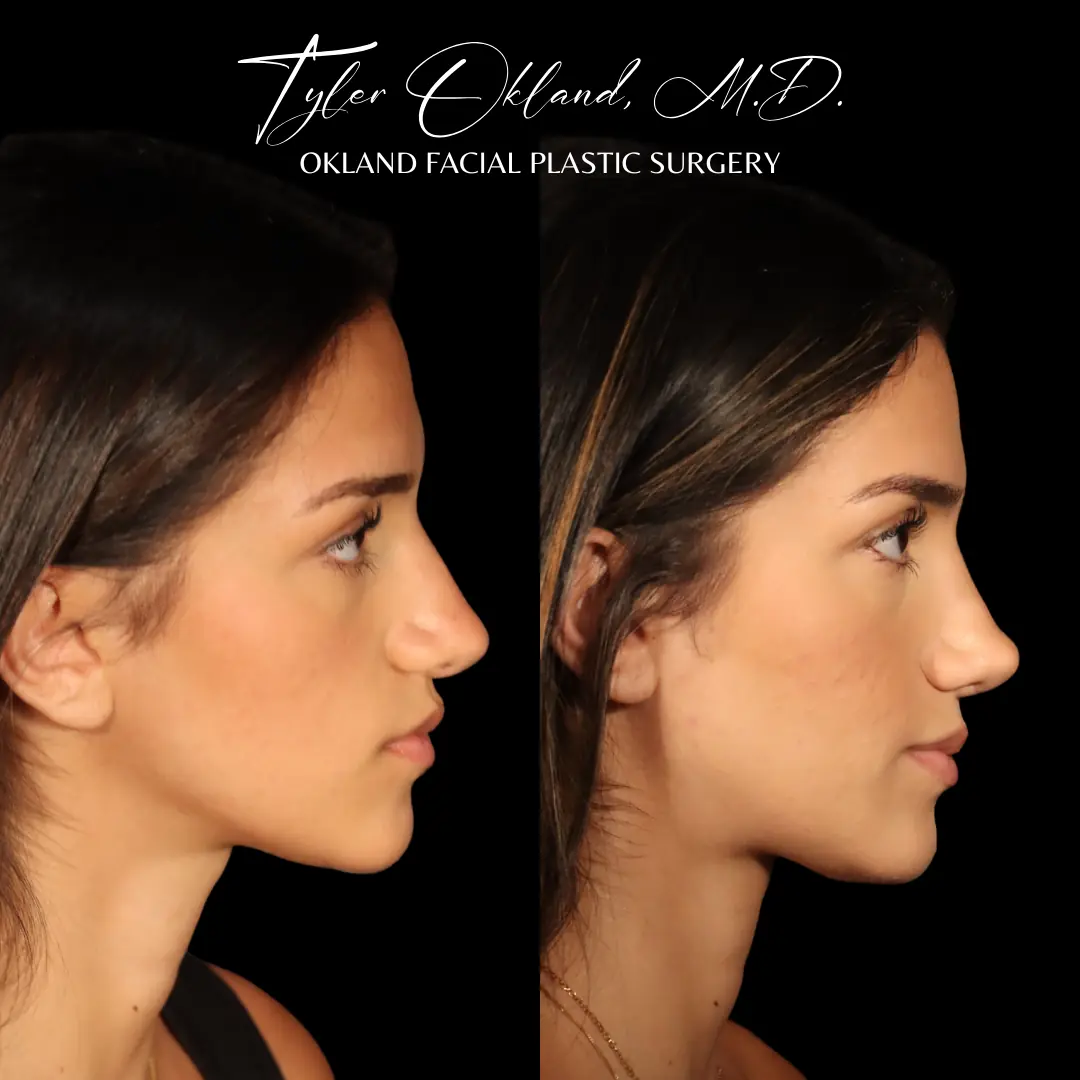
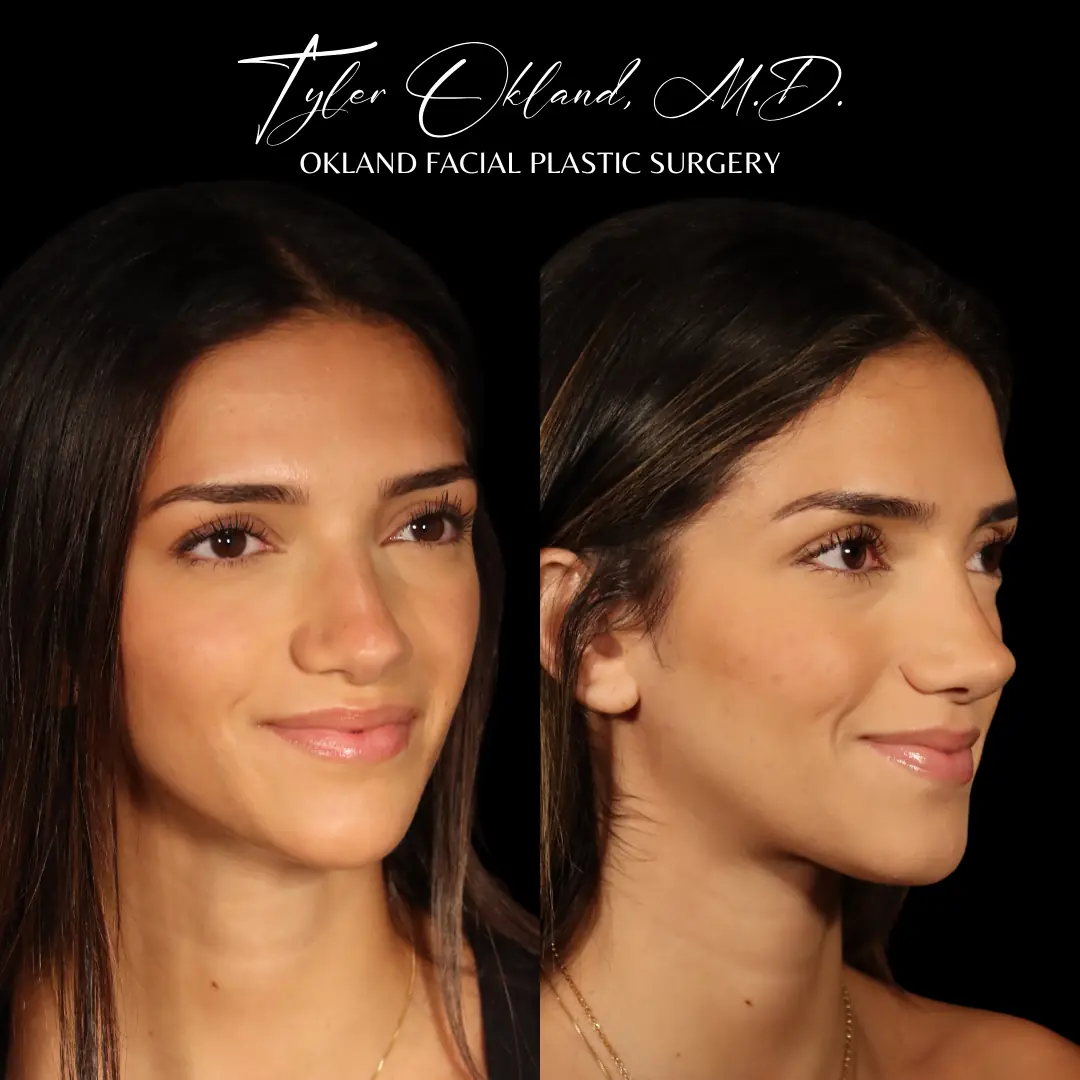
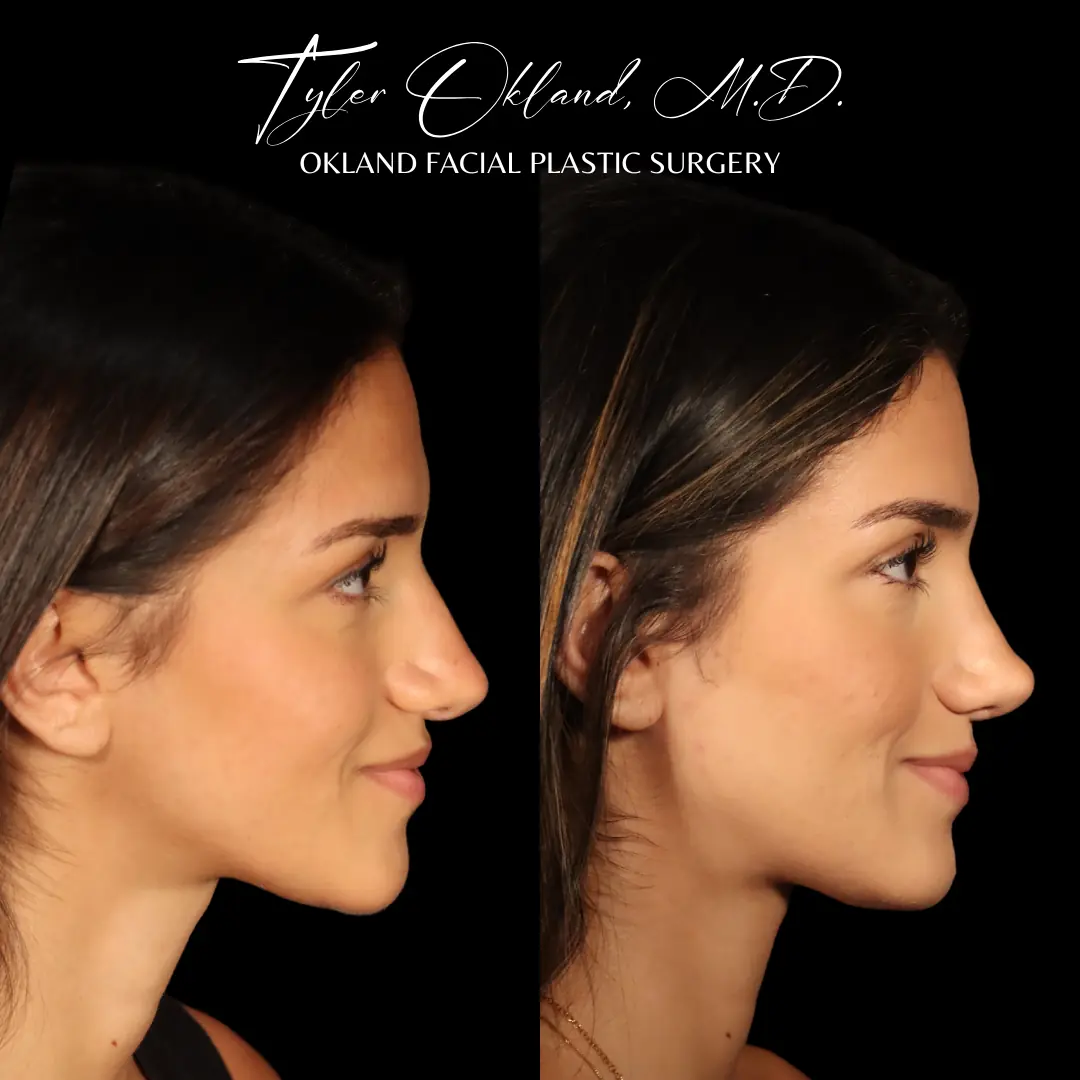
Two years after an open septorhinoplasty, this patient had almost no meaningful tip support, weak internal valves, a residual bony septal spur and too little septal cartilage for the reconstruction I wanted. Autologous rib allowed me to create durable tip support with a septal extension graft while also narrowing the nasal bones and alar base. At 14 months, the important change is not simply a sharper tip: the tip now holds its position when she smiles.

Her tip is no longer defenseless against her facial expressions.
07Fascia

Fascia: Structure Is Not the Same as Finish

Revision rhinoplasty is not only about rebuilding a cartilage framework. Sometimes the final challenge is making that framework disappear beneath the skin.

Thin revision skin can reveal a graft edge that would never be visible in a thicker envelope. Scarred skin may also need a smoother interface over reconstructed cartilage. This is where fascia can be extremely useful.

Temporalis Fascia

Temporalis fascia is a thin layer of your own tissue harvested through a small incision hidden in the hair-bearing temple.

I can use it as a soft biologic layer to camouflage dorsal irregularities, cover cartilage edges, smooth transitions or wrap diced cartilage. Published rhinoplasty series support deep temporal fascia as a useful material for dorsal camouflage and refinement in both primary and secondary cases. [8][9]

Think of cartilage as the architecture and fascia as one possible finishing layer. Fascia does not replace structural support. It helps the structure look less visible beneath the skin.

Rectus Fascia

Rectus fascia is the strong fascial covering of the abdominal wall. It is particularly useful when rib cartilage is already being harvested because it can be obtained from the same general donor region.

Again, these are tools. I do not use fascia because revision rhinoplasty is supposed to be complicated. I use it when the skin and framework need a better interface.

08Breathing

Functional Reconstruction: Breathing Is Still Part of the Operation

Every rhinoplasty plan for me begins with breathing: protect it, improve it and build beauty on that foundation.

Revision patients may arrive with problems that were present before their first surgery, problems that were not corrected, or new obstruction created by loss of support.

Depending on the anatomy, I may need to reconstruct the internal or external nasal valve, rebuild a narrowed middle vault, restore septal support, correct residual septal deviation, release scar-related vestibular narrowing, support the tip and alae, or address the turbinates. The plan is specific to the failure—not a standard menu of maneuvers.

A nose can look refined and still be structurally weak. I am not interested in that trade.

09Risks & Limitations

Revision Rhinoplasty Has a Higher Revision Rate

I discuss this directly because informed patients make better decisions.

Revision rhinoplasty is less predictable than primary rhinoplasty. The tissue is scarred, cartilage may be missing, skin behavior is less forgiving and the starting anatomy is often more complex.

A specialty-center study comparing primary and revision rhinoplasty reported another operation in 23.9% of revision patients compared with 10.5% of primary patients during follow-up. [1]

That is not my personal revision rate, and it should not be interpreted as a prediction of your outcome. Different practices treat very different levels of complexity, follow patients for different periods and define revision differently.

What the study does demonstrate is the larger point: once a nose has already been operated on, the probability of needing another operation is higher.

That reality changes both how I plan the surgery and how high my threshold becomes before recommending another intervention after a meaningful improvement.

Risks and Limitations of Revision Rhinoplasty

Revision rhinoplasty can create extraordinary improvement, but it is still surgery performed on living tissue that has already been altered.

Potential risks include persistent asymmetry or residual deformity; prolonged swelling or scar contracture; visible, palpable, displaced, warped or resorbed grafts; infection, bleeding or septal perforation; persistent or worsened obstruction; altered sensation; skin compromise or delayed healing; and the need for steroid injections, other postoperative treatment or another revision operation.

The more previous operations a nose has undergone, the more carefully I define the objective before operating.

The goal is not to promise that every imperfection disappears. The goal is to create a substantial enough improvement that the operation is worth what the nose has to go through to achieve it.

10Timing & Recovery

How Long Should You Wait Before Revision Rhinoplasty?

For most substantial revisions, I prefer to wait approximately 12 – 18 months after the previous rhinoplasty, and sometimes longer.

Swelling creates false anatomy. Scar matures. The skin envelope changes. Tip definition evolves. A nose that looks concerning at six months may look meaningfully different at twelve months.

Operating too early can mean treating a problem that was still changing.

There are exceptions — particularly severe functional problems, infections, exposed material or structural issues that cannot reasonably wait — but elective aesthetic revision is usually better planned after the nose has declared where it is going to settle.

Revision Rhinoplasty Recovery

The early recovery often resembles primary rhinoplasty: a cast or splint, congestion, swelling, possible bruising and temporary asymmetry from uneven edema.

The long recovery is often slower.

Scarred tissue may hold edema longer. Lymphatic drainage has already been altered. Thick skin may take longer to redrape. Major reconstruction can require more extensive dissection.

Many revision noses continue refining beyond one year, and some thick-skinned or multiply operated noses continue changing for up to two years.

Taping Is the Operation After the Operation+

I take postoperative taping seriously.

After I build a new framework, the skin envelope has to shrink and redrape over it. Taping provides gentle compression and can help reduce edema. Randomized clinical data in rhinoplasty have demonstrated improved edema control and skin draping with postoperative taping, particularly in thicker skin. [11]

The best randomized evidence is in primary rhinoplasty, but I use the same mechanical principle deliberately in revision patients because scarred skin and persistent edema can be even more consequential.

The duration is individualized, but stated simply I would say continue taping nightly until you no longer see a benefit. For revision rhinoplasty I recommend at least 3 – 6 months.

Nostril Retainers+

Some revision patients also need nostril retainers or intranasal stents.

I use them selectively, particularly when I am concerned about nostril asymmetry, vestibular scar contracture, alar retraction, narrowing, external-valve collapse or a reconstructed nostril that needs help resisting scar forces while it heals.

The adult aesthetic revision literature is smaller than the cleft-rhinoplasty literature, but the basic mechanical principle is well established: scar contracture can undo surgical widening or reshaping, and postoperative stenting can help maintain a corrected position in selected noses. [12][13]

A nostril retainer does not rescue a poor operation. It helps protect a good reconstruction during the period when scar is trying to contract around it.

Nostril retainers can be cut in half, coated in Aquaphor and placed in the nose. Size 7 - 8 are the two most common sizes. There is a link to the retainer in your post op instructions, you can begin using 10 days out from surgery.

Postoperative Management Is Active, Not Passive+

Revision rhinoplasty follow-up may include taping, nostril retainers, massage when appropriate, selective steroid treatment, monitoring breathing, photography and — importantly — knowing when to leave the nose alone.

Not every early asymmetry should be injected, massaged or re-operated. Swelling changes. Scar changes. The surgeon has to distinguish a healing nose from a true structural problem.

Patience is not neglect. Sometimes it is the correct treatment.

How Much Does Revision Rhinoplasty Cost?

Revision rhinoplasty generally costs more than primary rhinoplasty in my practice because the operation is often longer, less predictable and more likely to require additional graft material, airway reconstruction or a second donor site. The price also depends on the complexity of the reconstruction and whether autologous rib harvest is planned.

My current revision rhinoplasty fee should be pulled from the practice’s central pricing source rather than hard-coded in multiple places on the website. That keeps the number accurate when pricing changes.

View Current Rhinoplasty Pricing
11Choosing a Surgeon

How Many Surgeons Truly Perform High-Volume Revision Rhinoplasty?

There is no national registry that defines or counts “high-volume revision rhinoplasty surgeons,” so any exact number is an estimate.

In my view, only a few dozen surgeons in the United States routinely perform complex secondary and tertiary rhinoplasty at truly high volume.

Many excellent surgeons perform rhinoplasty. Revision rhinoplasty is a narrower discipline because it requires comfort with structural reconstruction, scarred anatomy, nasal airway surgery, rib grafting, fascia, complication management and intraoperative plan changes when the anatomy is not what anyone expected.

When choosing a revision surgeon, I would pay less attention to the word "specialist" on a website and more attention to whether the surgeon can explain what is structurally wrong, what the previous operation likely changed, how breathing will be evaluated, which cartilage source is planned and what the backup plan will be. The surgeon should also be comfortable with a depleted septum, routine rib grafting, scarred or thin skin, and the judgment to tell you what should be left alone.

Revision rhinoplasty is not a procedure where occasional experience is enough.

12Dr. Okland’s Approach

My Approach to Revision Rhinoplasty

My aesthetic philosophy does not change because the operation is a revision.

I still want the nose to belong to the face. I still want attention redirected toward the eyes, lips and hair. The nose should be the supporting actress, not the leading lady.

But revision rhinoplasty adds another layer of judgment. I am not designing from a blank slate. I am deciding what can be recovered, what should be rebuilt, what can be refined and what should be left alone.

The goal is straightER. MORE symmetric. Better supported. Better breathing. More harmonious.

Not mathematically perfect.

A successful revision nose is one that is meaningfully better, structurally durable and natural enough that you stop analyzing it.

13 · True Revision Cases

Revision Rhinoplasty Before-and-After Case Studies

These cases are included because the surgical reasoning is as important as the photograph. Each one shows what I inherited, what was structurally wrong, what I chose to rebuild and what I intentionally did not chase.

Case 01 · True Revision

Case 1: Rebuilding Tip Support With Autologous Rib Cartilage

Age: 22 year old Female · Follow-up: 14 months · Previous surgery: Open septorhinoplasty performed two years earlier.

01PRESENTING CONCERN

She came to me wanting a more deliberate, artistic result than she had achieved with her first surgery. She wanted a more sloped bridge, greater tip rotation and support, narrower nostrils, and elevation of the infratip.

Her biggest functional-aesthetic concern was what happened when she smiled: the tip lost support and the nose dropped downward, obscuring her upper lip. She wanted a sharper, more defined tip and a nose that would hold its position both at rest and in motion.

02ANATOMICAL ASSESSMENT / WHAT I INHERITED

Her prior transcolumellar incision was well healed, but the underlying tip structure was profoundly weak. I could palpate almost no meaningful tip support, and the tip complex collapsed easily into the surrounding scar tissue.

She also had:

  • A heavy soft-tissue envelope with thicker tip skin
  • Wide nostrils and alar bases
  • A reasonably good native tip-defining point, but almost no structural support beneath it
  • Weak internal nasal valves
  • A large residual left-sided bony septal spur
  • Insufficient remaining septal cartilage for the degree of reconstruction required

This was not primarily a problem of refinement. It was a problem of architecture. Before I could create a sharper or more feminine tip, I needed to rebuild the structure that would hold it there.

03SURGICAL PLAN / WHAT I DID
  • Open revision septorhinoplasty
  • Removal of the residual septal spur and posterior perpendicular plate
  • Autologous rib cartilage harvest from rib #8
  • Dorsal reduction to create the desired slope
  • Right-sided septal extension graft extending to the nasal spine to reinforce the weakened caudal septum and create durable tip support
  • Crushed cartilage onlay in the supratip
  • Osteotomies to narrow and straighten the nasal bones
  • Bilateral alar base reductions
04RESULT

At 14 months, the entire nose has a slimmer, cleaner silhouette. The nasal bones are straighter and narrower, the nostrils are smaller, and the tip is more refined and significantly better defined.

But the defining feature of this case is structure.

Her tip is no longer defenseless against her facial expressions. It no longer drops over the upper lip when she smiles. It stays where we intentionally placed it, supported by strong autologous rib cartilage rather than scar tissue alone.

For a revision nose with thicker skin, the definition of her new tip is exceptional. The bridge now carries the feminine slope she wanted, with a distinct supratip break and sharper domal highlights.

Those highlights change the way light moves across the center of the face. Instead of the nose dominating the expression, the light is redirected upward toward her eyes, allowing the rest of her face to come forward.

Case 1: Rebuilding Tip Support With Autologous Rib Cartilage revision rhinoplasty case image 1
01 / 13
Case 1: Rebuilding Tip Support With Autologous Rib Cartilage revision rhinoplasty case image 2
02 / 13
Case 1: Rebuilding Tip Support With Autologous Rib Cartilage revision rhinoplasty case image 3
03 / 13
Case 1: Rebuilding Tip Support With Autologous Rib Cartilage revision rhinoplasty case image 4
04 / 13
Case 1: Rebuilding Tip Support With Autologous Rib Cartilage revision rhinoplasty case image 5
05 / 13
Case 1: Rebuilding Tip Support With Autologous Rib Cartilage revision rhinoplasty case image 6
06 / 13
Case 1: Rebuilding Tip Support With Autologous Rib Cartilage revision rhinoplasty case image 7
07 / 13
Case 1: Rebuilding Tip Support With Autologous Rib Cartilage revision rhinoplasty case image 8
08 / 13
Case 1: Rebuilding Tip Support With Autologous Rib Cartilage revision rhinoplasty case image 9
09 / 13
Case 1: Rebuilding Tip Support With Autologous Rib Cartilage revision rhinoplasty case image 10
10 / 13
Case 1: Rebuilding Tip Support With Autologous Rib Cartilage revision rhinoplasty case image 11
11 / 13
Case 1: Rebuilding Tip Support With Autologous Rib Cartilage revision rhinoplasty case image 12
12 / 13
Case 1: Rebuilding Tip Support With Autologous Rib Cartilage revision rhinoplasty case image 13
13 / 13

Swipe to view the complete case ←→

Case 02 · True Revision

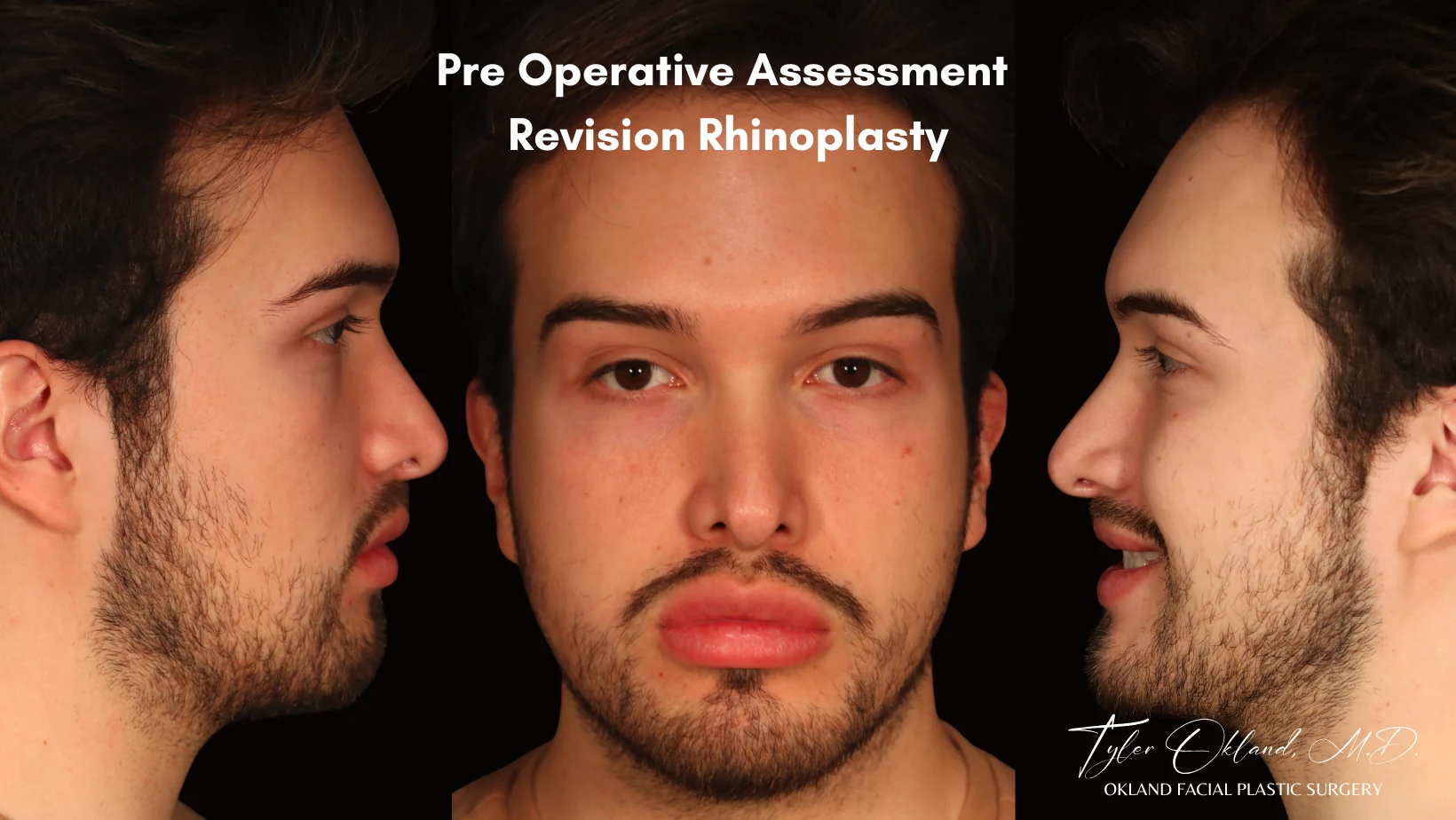
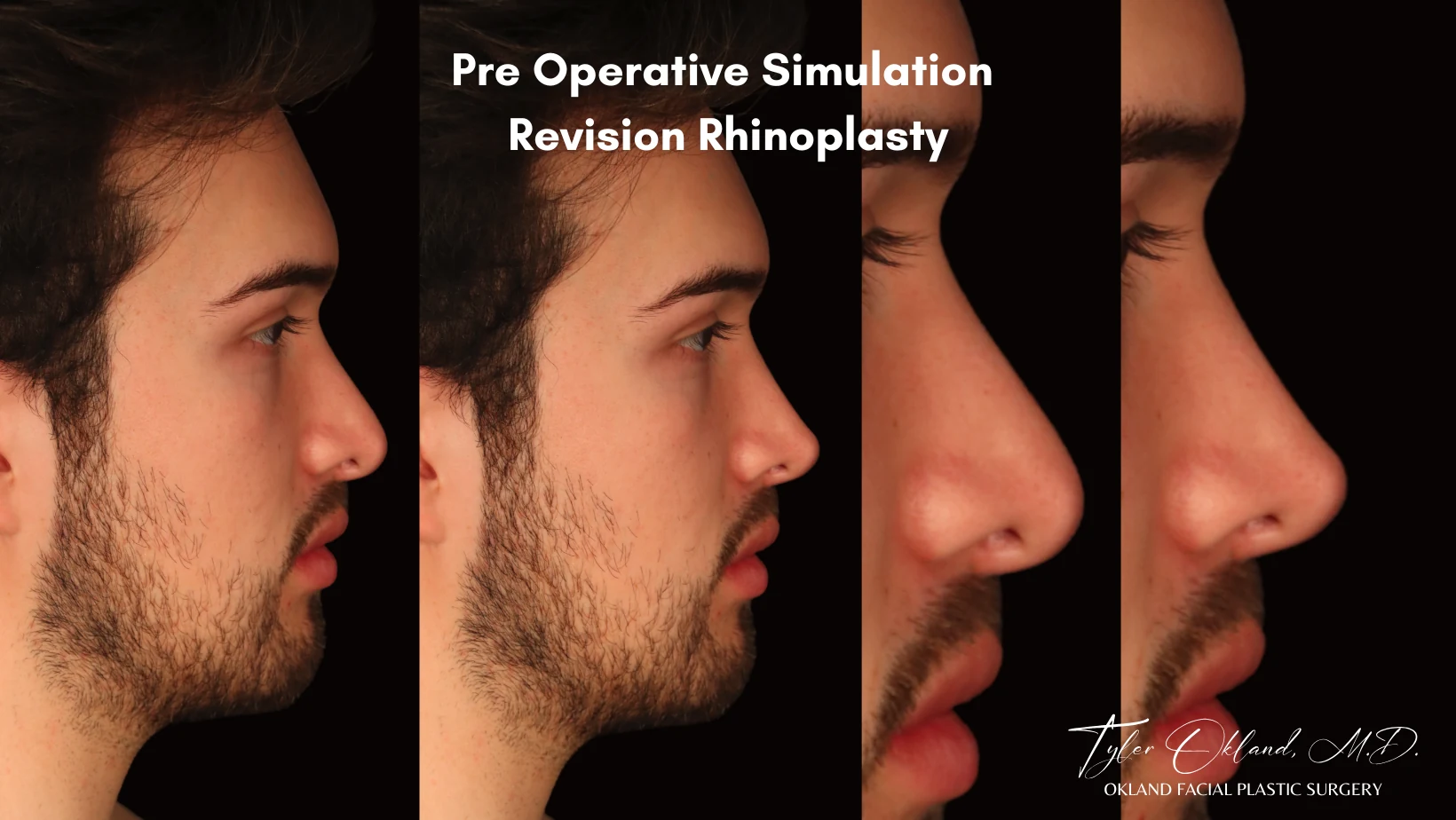
Case 2: Rebuilding an Over-Resected Tip and Correcting an Inverted-V Deformity

Age: 22 year old Male · Follow-up: 3 months · early result · Previous surgery: Open septorhinoplasty performed five years earlier.

01PRESENTING CONCERN

He wanted a more elegant, feminine nose with cleaner symmetry, greater tip rotation, a defined supratip break, a sharper tip-defining point, and narrower dorsal lines. He was also bothered by the way the unsupported tip dropped with smiling.

His goal was not subtle refinement. He wanted the nose to look more intentional: narrower, more sculpted, and more feminine, while still fitting naturally within the rest of his face.

02ANATOMICAL ASSESSMENT / WHAT I INHERITED

The dominant problem was over-resection.

Too much of the original tip cartilage and supporting tissue had been removed during his first rhinoplasty. Instead of creating refinement, the loss of structure had left the lower third of the nose pinched, weak, and poorly supported.

On examination, he had:

  • A well-healed prior open rhinoplasty scar
  • Severely weakened and over-resected tip cartilages
  • A bulbous but structurally unsupported tip
  • A pinched appearance through the lower third
  • A parentheses deformity of the tip
  • An inverted-V deformity
  • Bilateral alar retraction
  • Wide, poorly supported nostrils
  • Broad dorsal aesthetic lines
  • A crooked nasal axis on frontal view
  • Thick skin and a heavier soft-tissue envelope
  • Significant internal nasal valve collapse
  • A severely deviated septum

Facial asymmetry also mattered when judging the frontal result. The center of his Cupid's bow sits to the right of true facial midline, with additional rightward asymmetry through the lips and jaw. A nose cannot be evaluated in isolation from the face around it.

This was not a nose that needed more cartilage removed. It needed support restored.

The challenge was that there was almost nothing left to work with.

03SURGICAL PLAN / WHAT I DID

I performed an open revision septorhinoplasty with septoplasty.

Interestingly, despite his previous rhinoplasty, a formal septoplasty had not been performed. When I exposed the septum, however, nearly all of the remaining septal cartilage was ossified and unusable for grafting.

I was able to harvest only a 9 × 9 mm piece of usable septal cartilage.

I used that small piece to create a left-sided septal extension graft, strategically placing the limited cartilage where it would have the greatest structural impact. No rib cartilage and no additional structural grafts were required.

The operation included:

  • Open revision septorhinoplasty
  • Septoplasty and correction of the severe septal deviation
  • Left septal extension graft using the limited remaining native septal cartilage
  • Conservative cephalic trims
  • Dome-defining sutures
  • Dorsal hump reduction
  • Narrowing and refinement of the nasal bridge

This was a case where doing more did not mean adding more grafts. The important decision was knowing exactly where a very limited amount of cartilage would have the greatest effect.

04RESULT

At only three months, the change is already striking.

The bridge is narrower and more elegant, the dorsal aesthetic lines are cleaner, and the nose sits substantially closer to the facial midline. A slight residual leftward axis remains, particularly when viewed against the natural rightward asymmetry of his lips and jaw.

The lower third has changed even more dramatically.

The tip is now supported, rotated, and sharply defined. He has the feminine slope and distinct supratip break he wanted, without sacrificing structural integrity to achieve them. The alar retraction is significantly improved, and the nostrils appear dramatically narrower and more controlled.

Importantly, I did not perform alar base reductions.

Much of the apparent nostril width was not truly an alar-base problem. It was the consequence of a collapsed, inadequately supported tip. Once the central architecture was restored, the nostrils narrowed with it.

That is one of the most important lessons in revision rhinoplasty: sometimes the feature that appears too wide is not the structure that needs to be made smaller.

Sometimes it needs to be better supported.

This is a striking early result from every angle. More importantly, the nose now has an architecture capable of holding the shape we created.

Case 2: Rebuilding an Over-Resected Tip and Correcting an Inverted-V Deformity revision rhinoplasty case image 1
01 / 10
Case 2: Rebuilding an Over-Resected Tip and Correcting an Inverted-V Deformity revision rhinoplasty case image 2
02 / 10
Case 2: Rebuilding an Over-Resected Tip and Correcting an Inverted-V Deformity revision rhinoplasty case image 3
03 / 10
Case 2: Rebuilding an Over-Resected Tip and Correcting an Inverted-V Deformity revision rhinoplasty case image 4
04 / 10
Case 2: Rebuilding an Over-Resected Tip and Correcting an Inverted-V Deformity revision rhinoplasty case image 5
05 / 10
Case 2: Rebuilding an Over-Resected Tip and Correcting an Inverted-V Deformity revision rhinoplasty case image 6
06 / 10
Case 2: Rebuilding an Over-Resected Tip and Correcting an Inverted-V Deformity revision rhinoplasty case image 7
07 / 10
Case 2: Rebuilding an Over-Resected Tip and Correcting an Inverted-V Deformity revision rhinoplasty case image 8
08 / 10
Case 2: Rebuilding an Over-Resected Tip and Correcting an Inverted-V Deformity revision rhinoplasty case image 9
09 / 10
Case 2: Rebuilding an Over-Resected Tip and Correcting an Inverted-V Deformity revision rhinoplasty case image 10
10 / 10

Swipe to view the complete case ←→

Reconstructive Case · Not a Prior Rhinoplasty

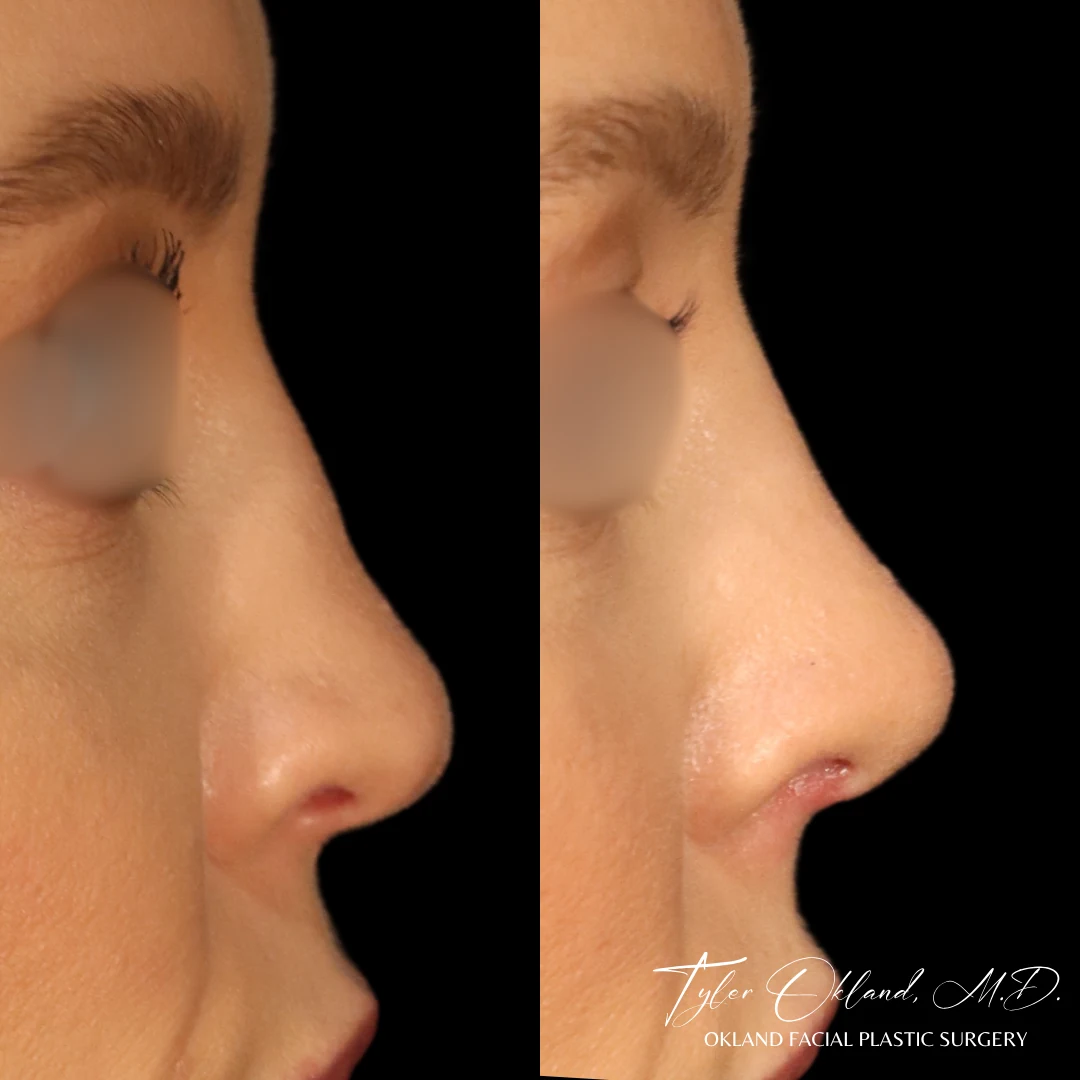
Reconstructive Case With Revision-Level Complexity: Rebuilding a Collapsed Saddle Nose

Age: 30 year-old female · Follow-up: 8 months · Previous surgery: None

01Presenting Concern

This patient had a history of intranasal cocaine use when she was younger, resulting in destruction of the nasal septum, a subtotal septal perforation and progressive collapse of the bridge—a deformity known as a saddle nose.

She presented with significant asymmetry on frontal view, a collapsed and washed-out appearance of both the bridge and tip, essentially no tip support, and severe difficulty breathing through her nose.

02Anatomical Assessment / What I Inherited

Although this was technically her first rhinoplasty, the complexity was much closer to a major revision reconstruction.

A saddle nose develops when the load-bearing septum has been severely weakened or destroyed. Without that central support, the bridge begins to collapse inward and the nose effectively starts sinking back toward the face.

Her subtotal septal perforation left almost no usable septum. On examination, I could not identify meaningful remaining septal cartilage. She also had essentially no functional internal or external nasal-valve support.

This meant there was very little native framework left to modify. I would essentially have to rebuild the structural foundation of her nose from the ground up.

The existing septal perforation also added another layer of complexity. Opening and manipulating the mucosal edges surrounding a large perforation can jeopardize the reconstruction and potentially increase the risk of graft exposure, infection or failure.

Small and even some large septal perforations can occasionally be closed by mobilizing healthy nasal lining from around the defect, or placing a dissolvable plate wrapped in fascia. She did not have that problem. Her perforation was subtotal, the surrounding tissue had been damaged by prior cocaine exposure, and there was simply not enough healthy local septal tissue to reconstruct something approaching a normal septum.

At the extreme end of reconstructive surgery, it is technically possible to bring entirely new vascularized tissue into the nose using procedures such as a large pericranial flap or even a microvascular free flap. But that would represent a massive reconstructive undertaking simply to close the perforation and, in my opinion, would have been completely disproportionate to the objective of her operation. This was not a realistically repairable septal perforation.

03Surgical Plan / What I Did
  • Open structural rhinoplasty
  • Confirmed complete absence of usable septal cartilage
  • Left the mucosal flaps surrounding the septal perforation undisturbed
  • Harvested autologous seventh-rib cartilage
  • Reconstructed the dorsal and caudal septal framework with rib cartilage
  • Created an extended dorsal/spreader construct and secured it directly to the nasal bones through hand-drilled fixation holes using 4-0 nylon
  • Created double-stacked caudal septal replacement grafts, secured inferiorly to the nasal spine and superiorly around the reconstructed dorsal strut
  • Harvested rectus fascia and wrapped it around a rib-cartilage laminate to create a smoother dorsal contour
  • Performed a small left-sided sill excision to improve nostril symmetry
04Result

At 8 months, she has had a dramatic structural and aesthetic improvement.

The saddle deformity has been eliminated. Her bridge is straighter, stronger and much more naturally defined. Her dorsal aesthetic lines are substantially improved on frontal view, and her tip now has shape, projection and structural support. Her alar retraction, columellar position and relationship between the nose and upper lip have also improved significantly.

There was, however, an important limitation to this reconstruction.

Because she had essentially no native septal cartilage remaining, I had to create an entirely new L-strut and rely heavily on the strength of her nasal bones to stabilize that reconstruction. For that reason, I could not safely perform osteotomies—the controlled bone cuts typically used to narrow or straighten asymmetric nasal bones.

Her nasal bones were significantly asymmetric before surgery, and that asymmetry therefore remains visible to some degree after surgery.

Correcting it would have required destabilizing the same nasal bones I was relying on to hold her reconstructed nose together. That would have been a poor trade.

This is exactly the type of decision that matters in complex revision and reconstructive rhinoplasty. The question is not whether every remaining imperfection can technically be changed. The question is whether changing it would make the nose better overall.

In her case, the answer was clear.

She went from a severely collapsed, poorly supported nose with essentially no septal framework to a nose that looks and functions like a normal structure again.

It is not perfect. It is dramatically better—and now she has a normal, strong and genuinely attractive nose.

That, to me, is an excellent example of the goal of complex revision rhinoplasty: meaningful improvement without sacrificing the reconstruction in pursuit of perfection.

Reconstructive Case With Revision-Level Complexity: Rebuilding a Collapsed Saddle Nose revision rhinoplasty case image 1
01 / 05
Reconstructive Case With Revision-Level Complexity: Rebuilding a Collapsed Saddle Nose revision rhinoplasty case image 2
02 / 05
Reconstructive Case With Revision-Level Complexity: Rebuilding a Collapsed Saddle Nose revision rhinoplasty case image 3
03 / 05
Reconstructive Case With Revision-Level Complexity: Rebuilding a Collapsed Saddle Nose revision rhinoplasty case image 4
04 / 05
Reconstructive Case With Revision-Level Complexity: Rebuilding a Collapsed Saddle Nose revision rhinoplasty case image 5
05 / 05

Swipe to view the complete case ←→

View Rhinoplasty Results
14 · Frequently Asked Questions

Frequently Asked Questions About Revision Rhinoplasty

Who is a good candidate for revision rhinoplasty?+

A good candidate has a specific aesthetic, structural or breathing problem after previous nasal surgery; is healthy enough for elective surgery; can avoid nicotine; and has allowed enough time for the nose to heal unless an earlier structural problem truly cannot wait. Just as important, I need to believe another operation can create a meaningful net improvement. A technically changeable detail is not automatically a good reason to operate again.

Does revision rhinoplasty cost more than primary rhinoplasty?+

Usually, yes. Revision surgery may require longer operating time, scar dissection, airway reconstruction, rib cartilage or fascia, and a more complex postoperative course. My current revision-rhinoplasty fee is published through the practice’s central pricing source so patients can see the current number rather than an outdated figure repeated across multiple pages.

What is revision rhinoplasty?+

Revision rhinoplasty, also called secondary rhinoplasty, is surgery performed after a previous rhinoplasty to improve persistent, recurrent or newly created aesthetic or functional problems. It can range from a limited refinement to complete structural reconstruction.

What is the difference between primary and revision rhinoplasty?+

Primary rhinoplasty begins with previously unoperated anatomy. Revision rhinoplasty must contend with scar tissue, altered blood supply, missing cartilage, previous grafts, changes in the skin envelope and a less predictable healing environment.

Is revision rhinoplasty more risky?+

The major risks are similar to primary rhinoplasty, but the probability of residual imperfection and another operation is higher in revision surgery because the tissue is scarred and the anatomy has already been altered.

How soon can I have revision rhinoplasty?+

For most elective revisions, I prefer approximately one year after the previous operation, and sometimes longer. Earlier surgery may be appropriate for selected urgent structural, infectious or functional problems.

Do I need my old operative report?+

It is useful but not mandatory. If you can obtain it, bring it. I also strongly encourage pre-primary photographs. Neither replaces the physical examination, and the anatomy found at surgery ultimately determines the plan.

Do all revision rhinoplasties require rib cartilage?+

No. Some patients still have enough usable septal cartilage. But if I think there is a meaningful chance the septum will be insufficient, I want a rib backup plan established before surgery.

What cartilage do you prefer for revision rhinoplasty?+

My structural hierarchy is septum first and rib second. Your own septal cartilage is the gold standard when enough remains. If it does not, rib provides the volume and strength required for serious reconstruction.

Is my own rib better than donor rib?+

Neither is automatically better for every reconstruction. Your own rib is strong and abundant but requires a chest harvest. Modern fresh-frozen donor rib avoids the donor-site operation and has encouraging published outcomes. I choose based on the reconstruction, your anatomy and your preferences.

Can revision rhinoplasty improve breathing?+

Yes, when the obstruction is structural and surgically correctable. Revision surgery may require rebuilding nasal valves, the middle vault, septal support or other structures weakened by previous surgery.

Can revision rhinoplasty be performed closed?+

Occasionally. For meaningful structural revision work, I generally prefer open exposure because I want to see the scarred anatomy directly and control reconstruction in millimeters.

How long does revision rhinoplasty take to heal?+

Social recovery is measured in weeks, but biological refinement is measured in months. Revision noses often stay swollen longer than primary noses, and some continue refining for up to two years.

What if my revision result is better but still not perfect?+

Then we decide whether the remaining problem is important enough to justify another operation. After a meaningful revision improvement, my threshold for going back into the nose becomes high. The possibility of making one detail better does not automatically make another operation a good trade.

How do I choose a revision rhinoplasty surgeon?+

Look for a surgeon who performs structural rhinoplasty routinely, is comfortable with nasal airway reconstruction and rib grafting, can articulate a backup cartilage plan, shows true revision cases, discusses re-revision risk directly and is willing to tell you when another operation is not worth doing.

Revision Rhinoplasty in Denver

You Do Not Need Another Promise. You Need a Plan.

Most revision patients have already placed enormous trust in a surgeon once.

Some are frustrated. Some are angry. Some are embarrassed that they had surgery at all. Others actually like much of their result but know something is still not right.

I do not think the answer is another promise of perfection.

My job is to determine what happened, identify what can realistically be improved, explain what cannot, and build a surgical plan with enough contingencies to deal with the anatomy I actually find.

If I believe I can meaningfully improve your nose, I will explain how.

If I believe another operation is more likely to trade one problem for another, I will tell you that too.

Revision rhinoplasty requires reconstruction, judgment, patience and the discipline to know when improvement is enough.

ABOUT DR. TYLER OKLAND

Tyler Okland, MD is a double board-certified facial plastic and reconstructive surgeon. He completed medical school at the University of Colorado, a five-year Otolaryngology-Head and Neck Surgery residency at Stanford, and fellowship training in facial plastic and reconstructive surgery at Vanderbilt. His surgical practice focuses on rhinoplasty and facial rejuvenation, including complex structural revision rhinoplasty, nasal airway reconstruction and rib grafting.

Okland Facial Plastic Surgery • Denver, Colorado • Out-of-state revision rhinoplasty patients welcome.

Medical References+
  • [1] Differences between Primary and Revision Rhinoplasty: Indications, Techniques, Grafts, and Outcomes — Plast Reconstr Surg. 2021. https://pubmed.ncbi.nlm.nih.gov/34270514/
  • [2] Complications Associated with Autologous Costal Cartilage Used in Rhinoplasty: An Updated Meta-Analysis — Aesthetic Plast Surg. 2023. https://pubmed.ncbi.nlm.nih.gov/36071242/
  • [3] Complications Associated With the Use of Autologous Costal Cartilage in Rhinoplasty: A Systematic Review — JAMA Facial Plast Surg. 2015. https://pubmed.ncbi.nlm.nih.gov/26229125/
  • [4] MTF Biologics Profile® Costal Cartilage Allograft — official product information. https://www.mtfbiologics.org/our-products/detail/profile
  • [5] Fresh Frozen Cartilage in Rhinoplasty Surgery: A Systematic Review of Outcomes — Aesthetic Plast Surg. 2024. https://pubmed.ncbi.nlm.nih.gov/38528125/
  • [6] Fresh Frozen vs Autologous Costal Cartilage in Rhinoplasty: A Meta-Analysis of Complication Rates — Aesthet Surg J Open Forum. 2026. https://pubmed.ncbi.nlm.nih.gov/42212058/
  • [7] Adverse Outcomes and Complications of Autologous Versus Homologous Costal Cartilage Grafts in Septorhinoplasty — Aesthet Surg J. 2026. https://pubmed.ncbi.nlm.nih.gov/42374829/
  • [8] Rhinoplasty: Aesthetic Augmentation With Improvement of Dorsal Aesthetic Lines — Aesthet Surg J. 2021. https://pubmed.ncbi.nlm.nih.gov/33674857/
  • [9] Tubed Temporalis Fascia for Nasal Dorsal Contouring: A Novel Technique — Facial Plast Surg. 2021. https://pubmed.ncbi.nlm.nih.gov/33582670/
  • [10] Diced Cartilage Grafts Wrapped in Rectus Abdominis Fascia for Nasal Dorsum Augmentation — Plast Reconstr Surg. 2015. https://pubmed.ncbi.nlm.nih.gov/26368329/
  • [11] Effect of Postrhinoplasty Taping on Postoperative Edema and Nasal Draping: A Randomized Clinical Trial — JAMA Facial Plast Surg. 2016. https://pubmed.ncbi.nlm.nih.gov/26914594/
  • [12] A Novel Intranasal Stent for Functional Rhinoplasty and Nostril Stenosis — Laryngoscope. 2005. https://pubmed.ncbi.nlm.nih.gov/15867663/
  • [13] The Role of Postoperative Nasal Stents in Cleft Rhinoplasty: A Systematic Review — Cleft Palate Craniofac J. 2024. https://pubmed.ncbi.nlm.nih.gov/37501651/