Lip Lift in Denver, Colorado: Deep Plane Upper Lip Lift
A lip lift is not really about making the lip bigger. It is about putting the upper lip in a better position: shortening an elongated upper lip, restoring upper-tooth show, and everting more of the red lip without creating an overfilled mouth.
MY PHILOSOPHYThe most important number in a lip lift is not how much skin I take. It is how much skin I leave.
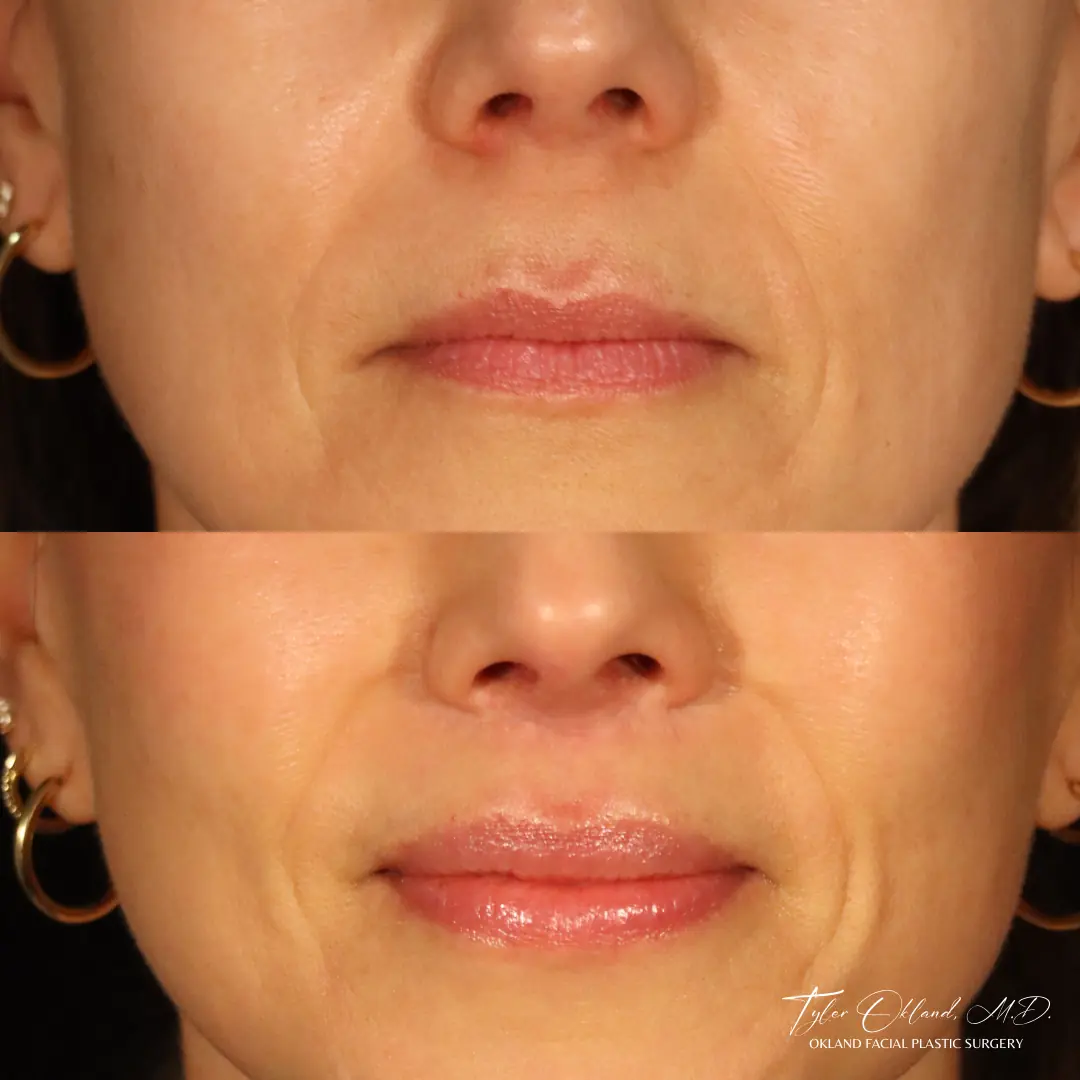
The Upper Lip Lengthens and Deflates as We Age.
A youthful upper lip is defined by position, shape, tooth show and its relationship to the nose and mouth—not volume alone.
With age, the upper lip lengthens, covers more of the upper teeth and can roll the vermilion inward. The result is a longer white lip, less red-lip show, less upper-incisor display and a mouth that looks flatter or older.
I watch patients talk. Seeing the upper teeth during normal speech is youthful and attractive. Someone who shows essentially no upper teeth gets my attention; that often tells me more than simply measuring the philtrum with a ruler.
The Number That Matters Is What I Leave
A lot of lip-lift planning is described in terms of how many millimeters are removed. I think that starts the equation from the wrong side.
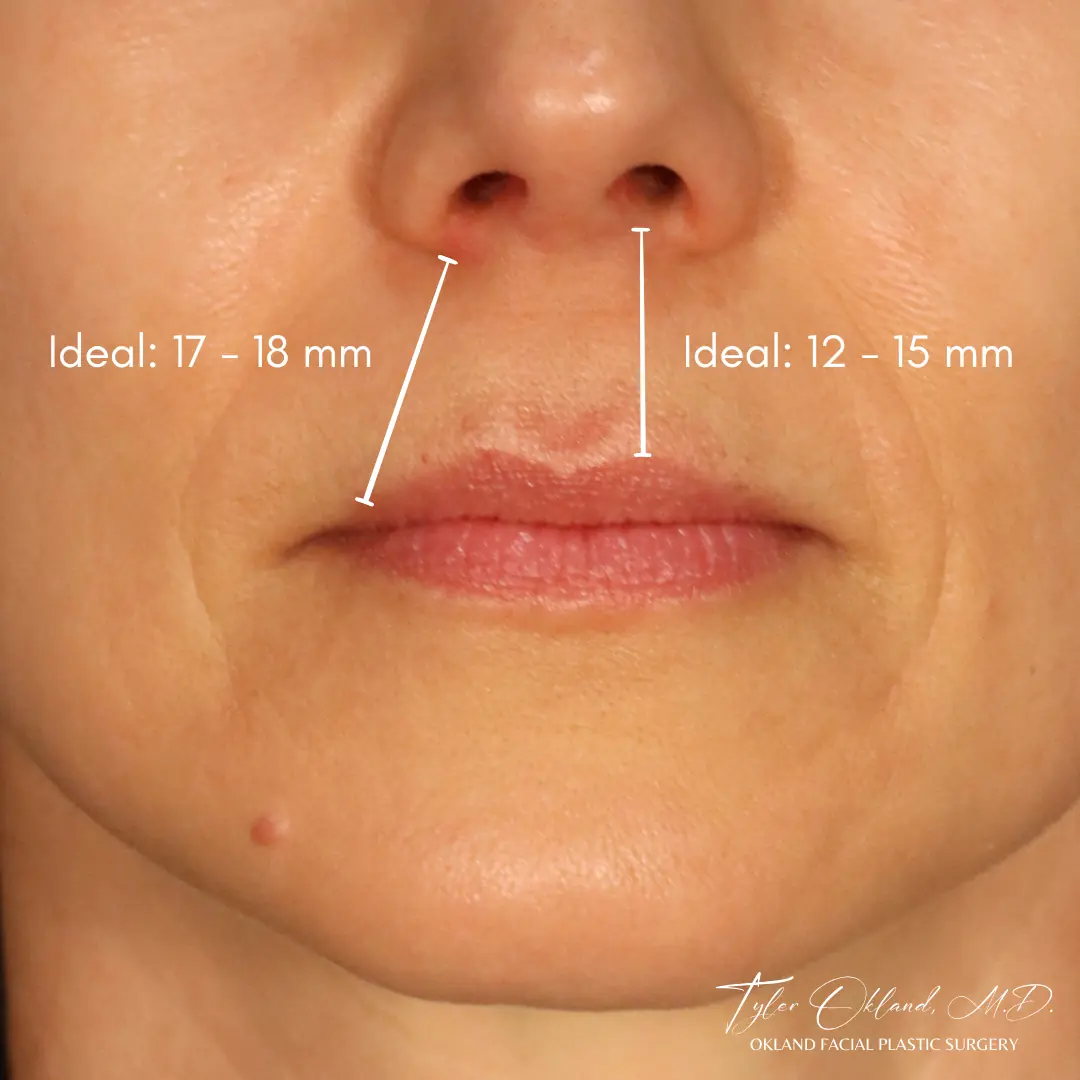
I plan the operation around the amount of upper lip that should remain after surgery. In many patients, I am aiming to leave roughly 12–15 mm centrally at the philtrum and 17–18 mm laterally. These are my common planning ranges, not universal beauty standards. I modify them based on anatomy, sex, tooth show, nasal base, mouth width, lip shape and the amount of eversion I want.
Two patients can start with the same philtral length and need completely different resections. One may already show upper teeth when speaking; another may have a long, flat upper lip with no dental display. The correct operation leaves the right lip—it does not remove a predetermined number of millimeters.
Who Is a Good Candidate for a Lip Lift?
The best candidate is not simply someone who wants a fuller upper lip. I am looking for anatomy that will actually improve when the lip is shortened and everted.
- A long upper lip or elongated philtrum relative to the rest of the face.
- Little or no upper-tooth show during normal speech, particularly when that lack of dental display makes the mouth look older or closed.
- A relatively wide nasal base compared with the mouth, which often gives the subnasal lift a favorable proportion of the upper lip to work across.
- A flat or inward-turned upper vermilion that would benefit from better eversion rather than simply more filler.
- A patient who wants a structural, long-lasting change in lip position rather than repeated temporary augmentation.
- A patient undergoing broader facial rejuvenation in whom the upper lip has lengthened as the rest of the face has aged.
Who Is Not an Ideal Candidate?
- Someone who already shows a large amount of upper teeth at rest or during normal speech.
- A patient with an already short upper lip in whom further shortening would distort proportion.
- Someone whose primary problem is lack of lip volume but whose lip position and tooth show are already good.
- A patient who is unwilling to accept the scar trade-off. The scar is the biggest aesthetic risk of the operation.
- A patient with active lip filler who is unwilling to dissolve it before surgery when it is hyaluronic-acid based.
How I Perform a Modern Deep Plane Lip Lift
A modern lip lift should do more than remove skin beneath the nose. Skin excision shortens. The deep release is what lets the lip move and evert without depending on skin tension.
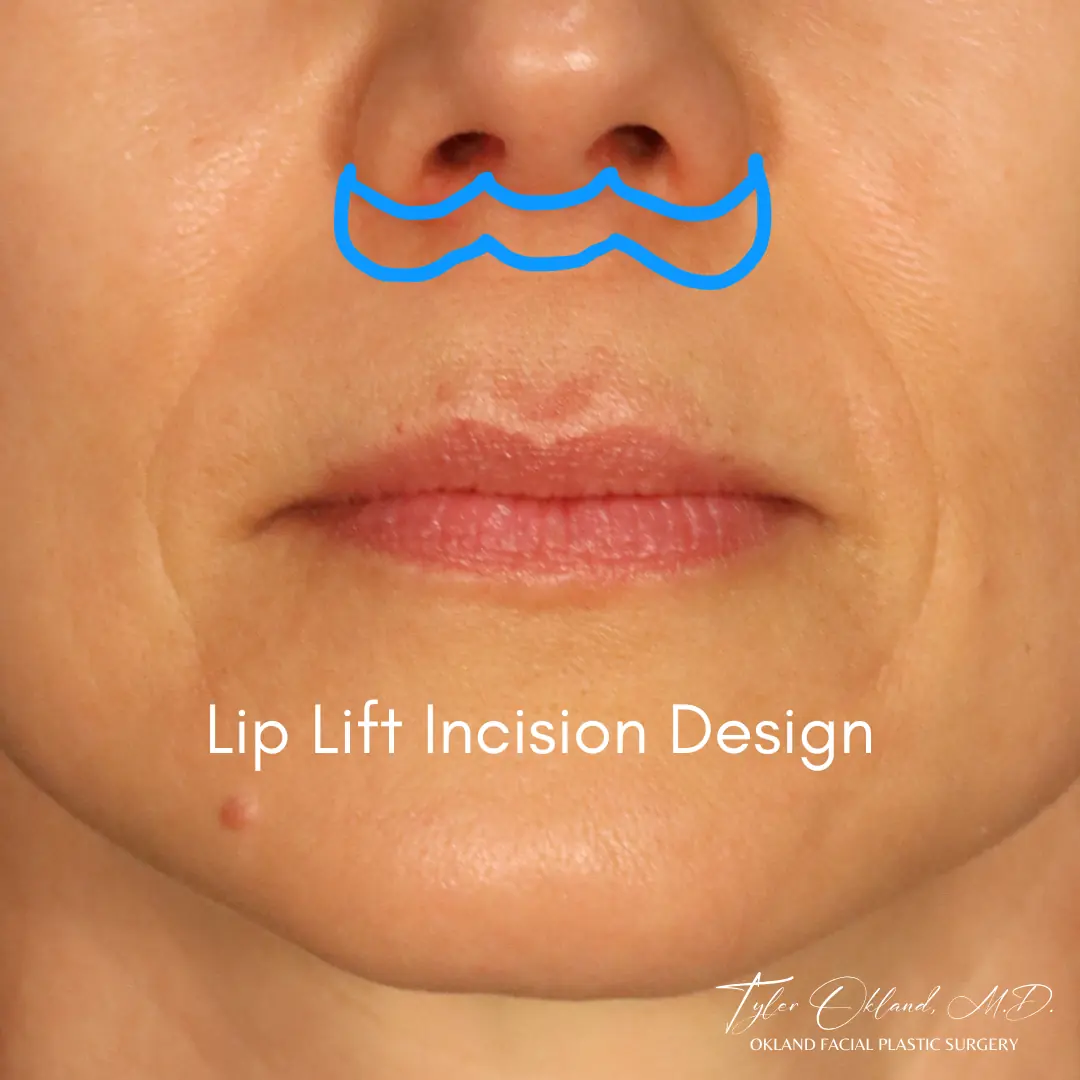
- Design what stays. Before incision, I mark the central and lateral lip I want to leave. My usual central range is 12–15 mm: closer to 12 mm for a shorter, more “done” result; closer to 15 mm when the goal is very natural and conservative. Final vermilion position and tooth show matter far more to me than whether I removed 4 mm or 6 mm.
- Hide the incision at the nasal base. The incision follows the natural contours beneath the nose and around the alar base. This is often called a subnasal or “bullhorn” lip lift. “Bullhorn” describes the incision pattern; it says nothing about the depth of release.
- Release the soft tissue in the deep plane. I elevate the upper-lip soft-tissue envelope off the orbicularis oris and carry the release toward the vermilion border, especially laterally. This frees the lip to rotate and evert instead of relying on skin tension.
- Create lateral eversion, not just central shortening. If the center shortens but the outer lip stays rolled inward, the result looks incomplete. I want clean eversion from oral commissure to oral commissure. The lateral release does most of that work; I often add a tiny amount of fat at the corners when it improves the transition.
- Close with very small sutures and minimal skin tension. The scar matters enormously. The deeper repositioning should do the work so the skin closure stays precise and low tension. I use tiny sutures at the nasal base so the mature scar becomes as inconspicuous as possible.
Why I Often Add a Small Amount of Fat to the Outer Lip
Part of my lip-lift technique often includes a very small amount of fat transfer to the outer lip. I am not trying to create a large or overfilled lip. I am trying to complete the eversion.
The central lip responds strongly to shortening; the lateral lip can remain flatter. A tiny amount of strategically placed fat near the outer red lip and oral commissures can create a smoother vermilion roll from one corner of the mouth to the other. I want one coherent lip—not a lifted center with forgotten corners. This is especially useful when I am already harvesting fat for facial rejuvenation.
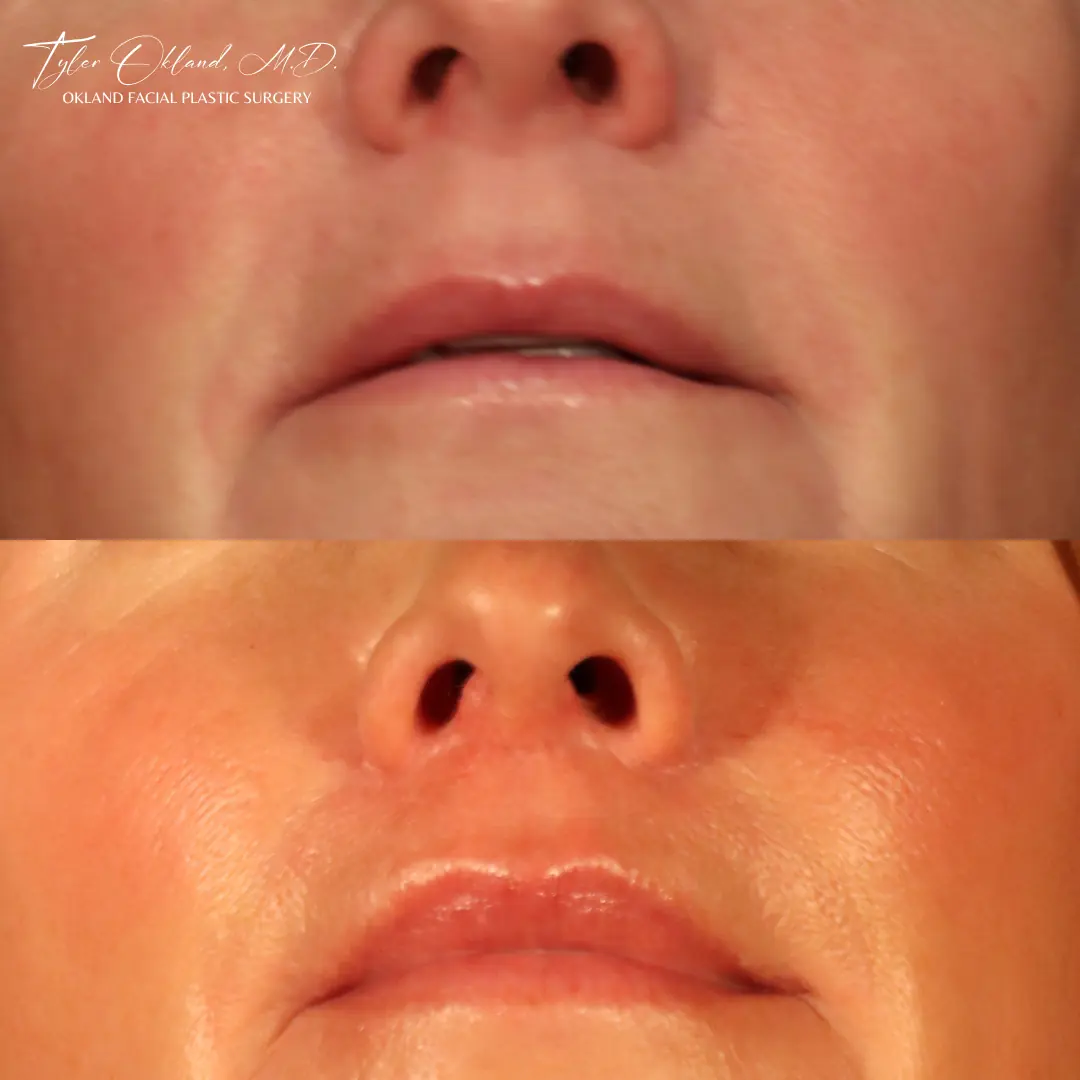
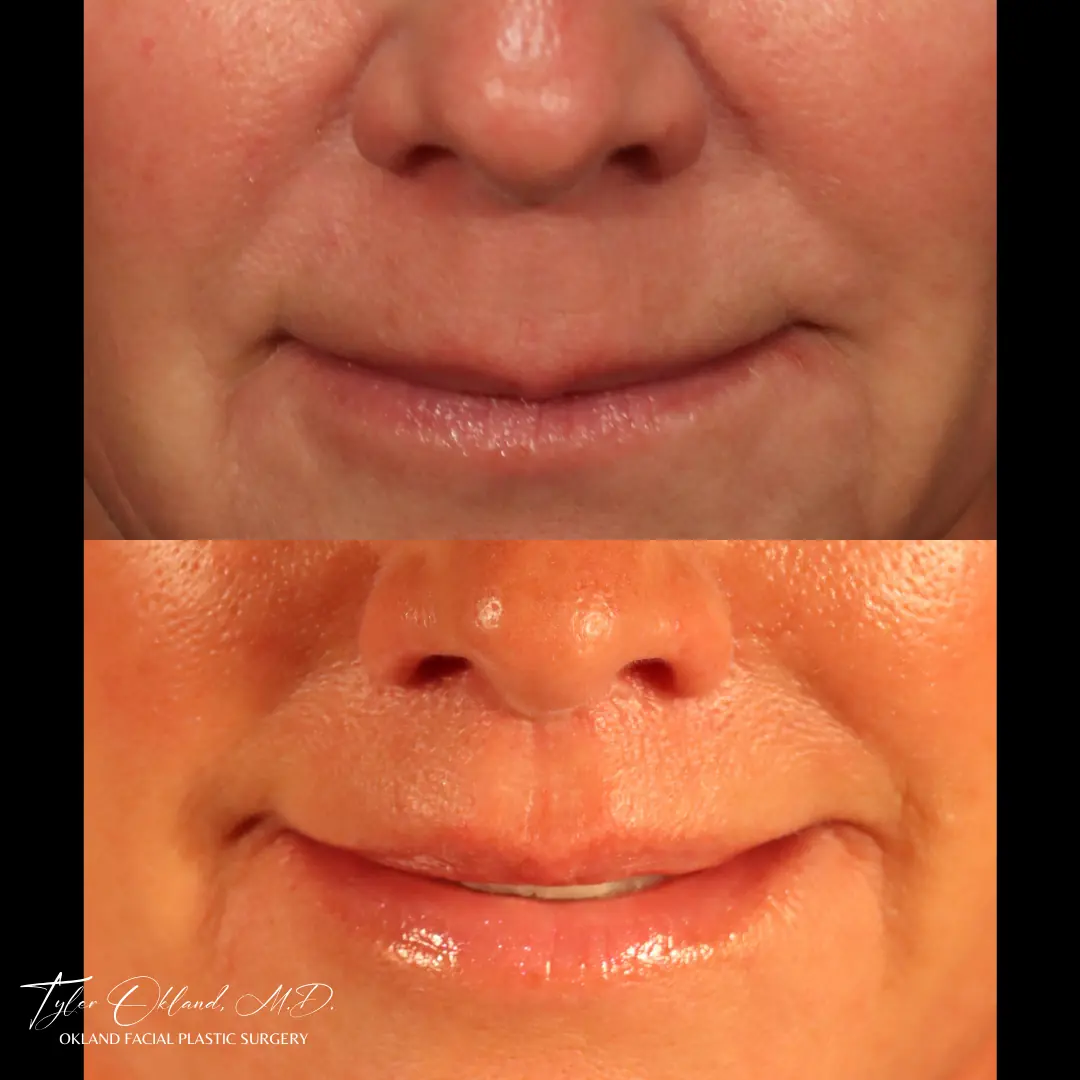
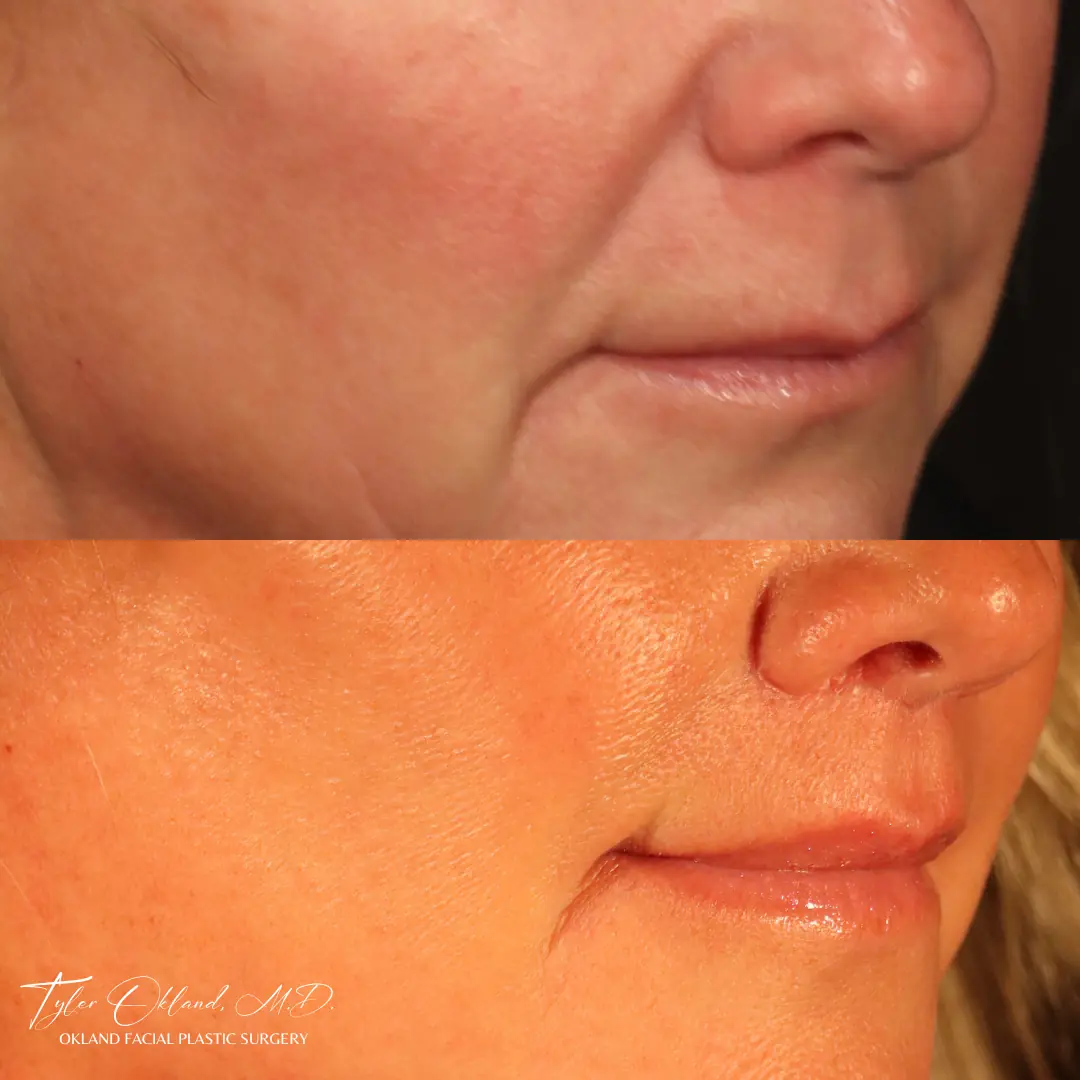
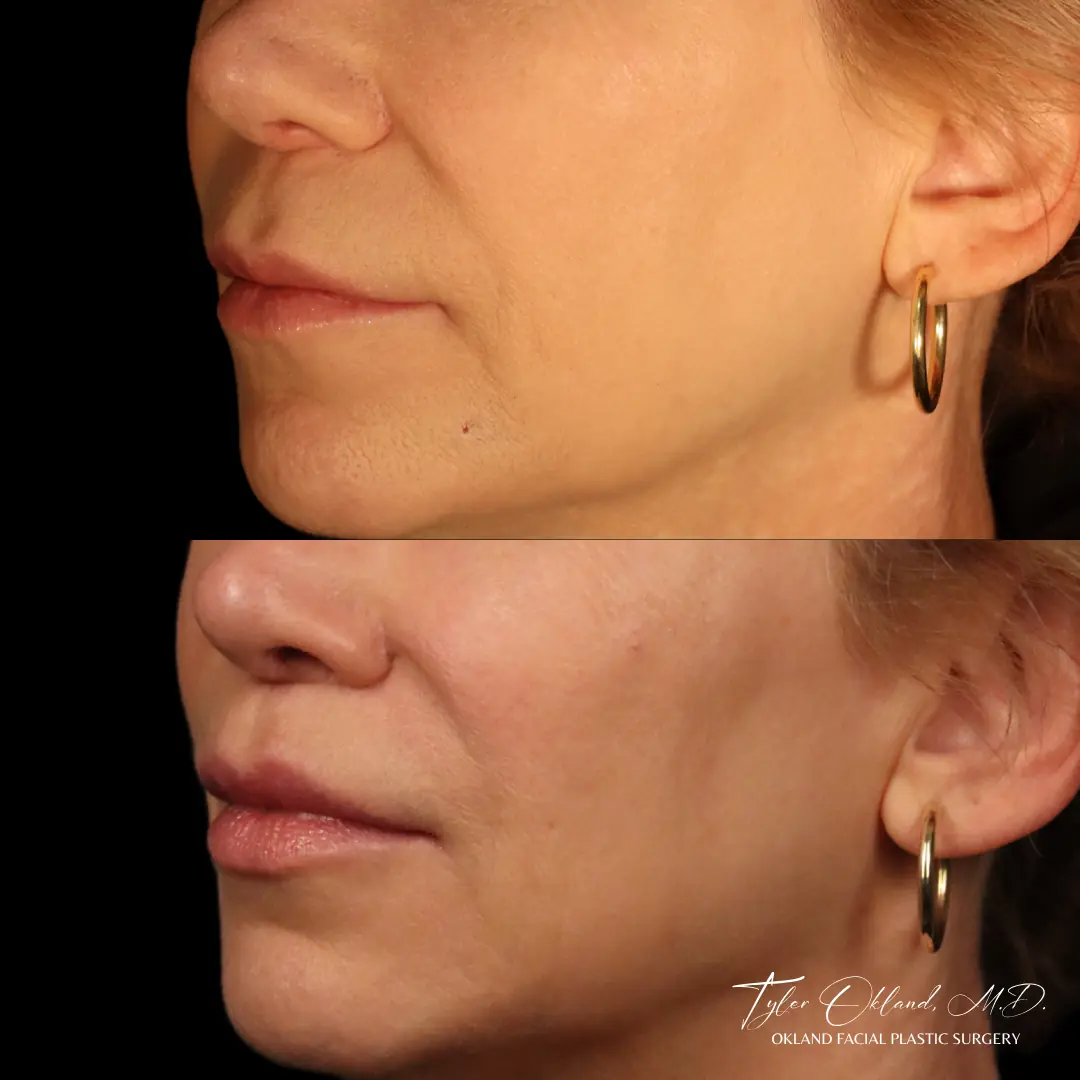
60-year-old female 6 months following lip lift with fat transfer to the lips
Lip Lift vs. Lip Filler: Position and Volume Are Different Problems
Filler and lip lift are not competing versions of the same operation. Filler adds volume. A lip lift changes position, length, tooth show and eversion.
If the upper lip is already long and covers the teeth, adding more filler does not shorten it. In my opinion, repeatedly placing large volumes of filler into an already long upper lip can weigh on the tissue, make the lip look longer and accelerate an aged appearance. More volume is not automatically more youthful.
When the diagnosis is an elongated upper lip, I would rather correct the architecture than keep adding weight to it.
Why I Want Hyaluronic-Acid Lip Filler Dissolved Before Surgery
If you have hyaluronic-acid filler in your lips, I generally want it dissolved and the lip settled before surgery.
Hyaluronic acid is hydrophilic: it binds water. I do not want filler-related volume or water retention distorting tissue I am measuring and closing precisely. Surgery already creates swelling; extra filler-related swelling can place more tension on the tiny nasal-base sutures and worsen scar healing. I want to operate on your lip—not your lip plus retained filler and water.
Upper-Tooth Show Is Part of the Operation
I do not plan a lip lift from a static photograph alone. I watch the patient talk.
Young faces generally show more upper tooth during speech. My goal is youthful dental show—not maximal tooth show or a gummy smile. If someone already shows plenty of upper teeth when speaking, the lift needs to be conservative or may not belong in the plan.
The Nose and Mouth Have to Be Designed Together
The upper lip does not exist in isolation. I look at nasal-base width, nasal projection and rotation, the columella, philtrum, teeth, mouth width and chin. A relatively wider nasal base compared with the mouth is often favorable; a very wide mouth with a narrow nasal base requires more thought about lateral eversion.
If the nose is already highly rotated with substantial nostril show, the lip-lift scar can be more visible because the nasal tip is not hiding the central portion of the scar.
If rhinoplasty is also being considered, the nose and upper lip should be planned as one composition. Changing tip projection, rotation or the columella changes the frame immediately above the lip.
Why I Often Include a Lip Lift With Facial Rejuvenation
A facelift can restore the cheek, jawline and neck. It cannot shorten an upper lip that has lengthened with age. If the face is comprehensively rejuvenated while the upper lip remains long, flat and tooth-covering, the lower third can still look older than everything around it.
That does not mean every facelift needs a lip lift. Every procedure has to earn its place. But when the upper lip has clearly lengthened, the lip lift corrects a problem that neither facelift nor filler can fix.
The Biggest Risk of a Lip Lift Is the Scar
The biggest aesthetic risk of a lip lift is the scar. I do not hide that. The incision sits at the base of the nose, where natural shadows and curves help camouflage it, but it is still a scar on the center of the face.
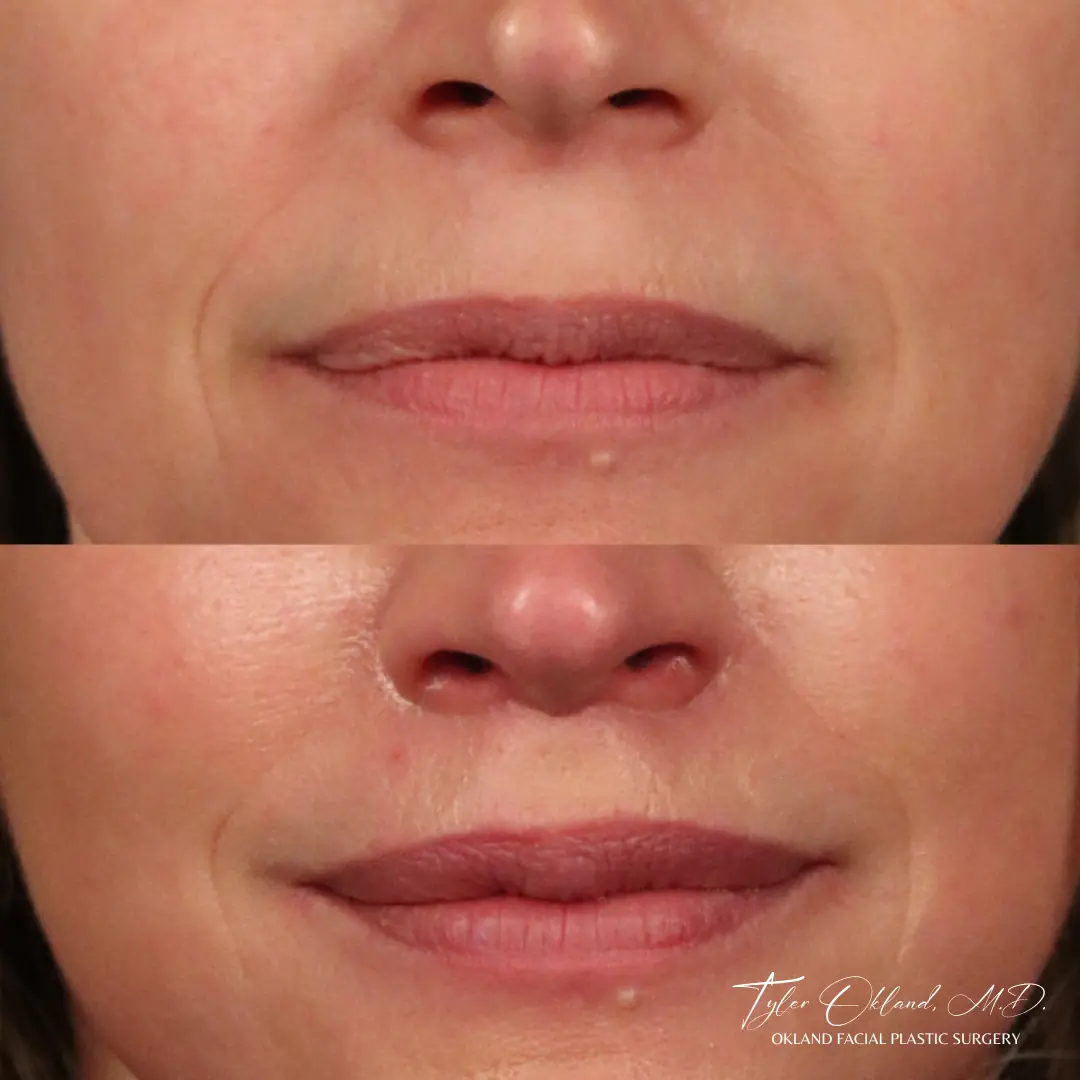
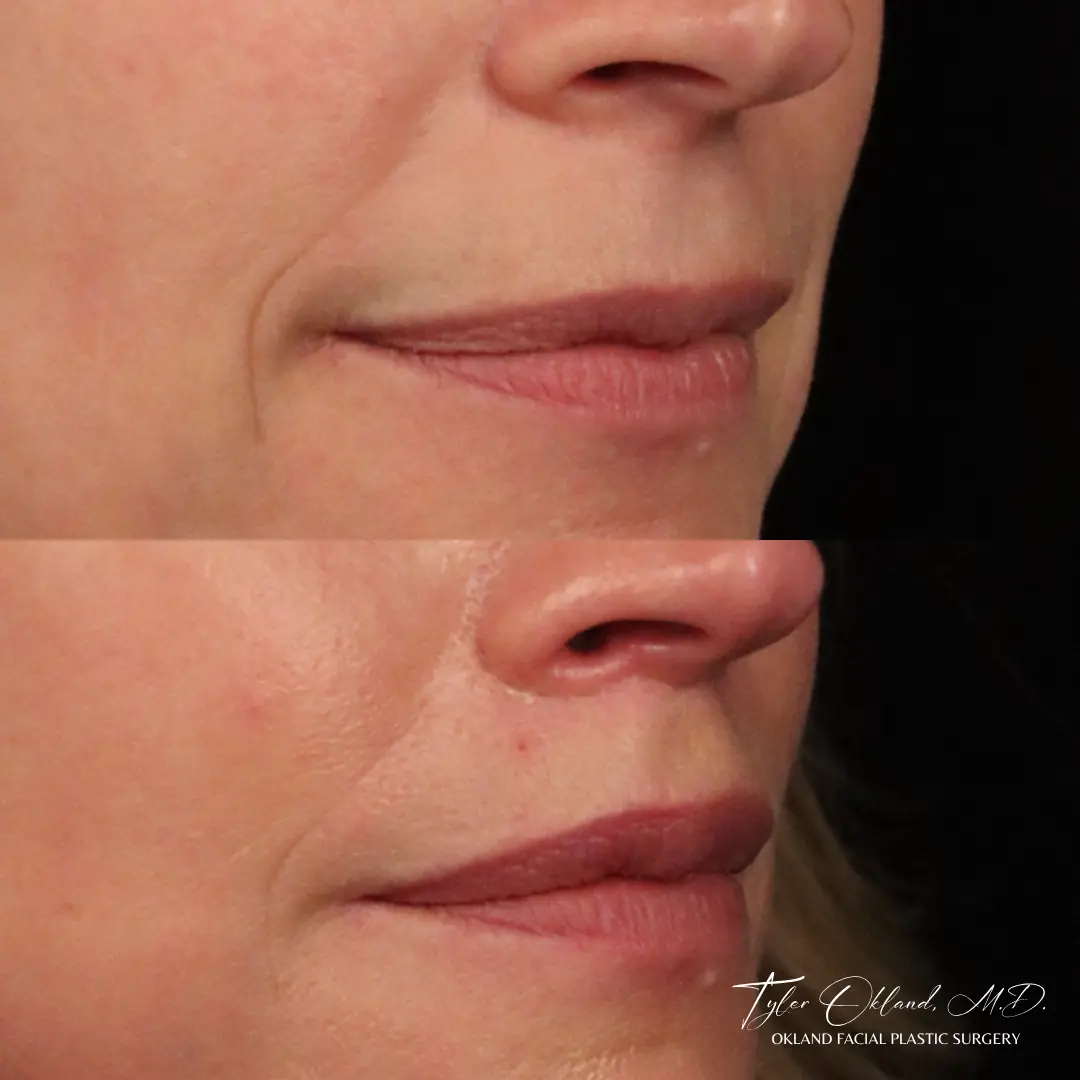
56 year old female 2 months out from lip lift.
Most lip-lift scars heal beautifully with time. Good design, deep release, low-tension closure and tiny sutures matter. Early redness or firmness does not predict the mature scar. If a scar needs help after healing, we have multiple tools available, including microneedling and CO2 laser resurfacing.
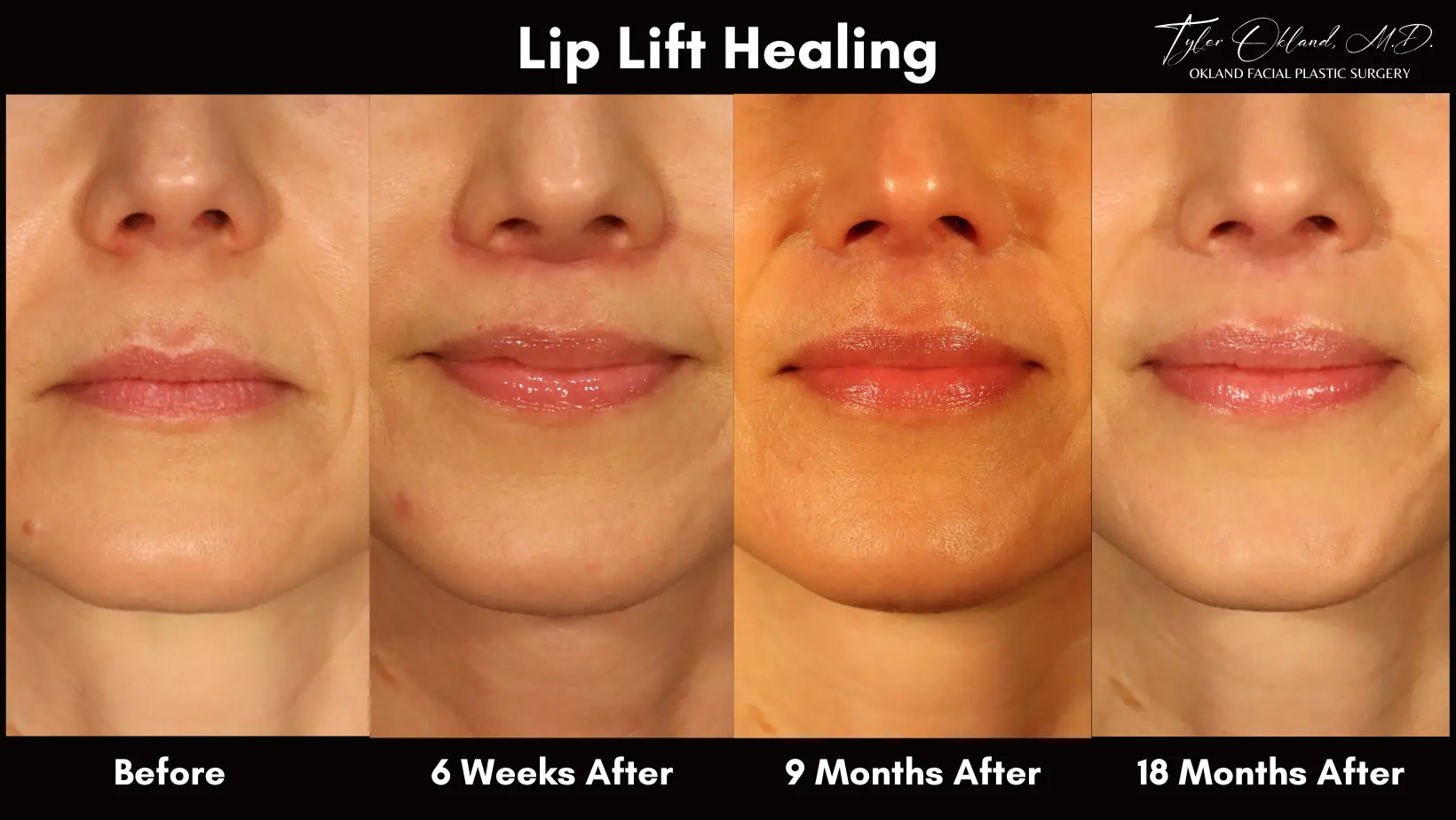
Lip Lift Recovery: What to Expect
The operation is relatively small, but the mouth moves constantly. Talking, smiling and eating all place motion across the healing area, so the first week matters.
- Swelling: most noticeable in the upper lip and beneath the nose for the first several days. The lip can look dramatically fuller than the final result early on.
- Bruising: variable and usually limited.
- Tightness: expected beneath the nose while the tissues heal in their new position.
- Sutures: tiny external sutures at the nasal base require careful wound care and are removed according to the healing plan.
- Smile and movement: the mouth may feel stiff or strange early; natural movement returns as swelling and tension improve.
- Social recovery: most patients plan roughly 1–2 weeks, although scar redness and residual swelling can last longer.
- Final result: eversion, tooth show and scar quality continue to mature over several months.
How Long Does a Lip Lift Last?
A lip lift is a structural operation. The removed skin does not grow back, and the lip does not simply return to its starting length when swelling resolves. Aging continues.
The goal is not an artificially short lip that looks good for six months. The goal is to leave the right amount of lip so the result still makes sense years later.
Bull horn Lip Lift, Subnasal Lip Lift and Deep Plane Lip Lift: What Is the Difference?
These terms overlap. The incision name tells you much less than how the lip was released, repositioned and closed.
Lip Lift Risks and Safety
A lip lift is a small operation in a highly visible area. The scar deserves the most attention, but it is not the only risk.
- Visible, widened, raised, depressed or irregular scarring.
- Asymmetry or uneven nostril/alar-base appearance.
- Over-shortening or under-shortening of the upper lip.
- Too much or too little upper-tooth show.
- Temporary or persistent numbness, tightness or altered sensation.
- Infection, bleeding, delayed healing or wound separation.
- Changes in smile dynamics or lip movement during healing.
- Need for scar treatment or revision surgery.
- If fat transfer is added: asymmetry, undercorrection, overcorrection or partial fat resorption.
Lip Lift Before and After: Show the Whole Relationship
Lip-lift photography should show the nose, philtrum, mouth and teeth together. The operation succeeds when those structures look more balanced—not when a tight crop simply makes the vermilion look larger.
Frontal, three-quarter and speaking or smiling views are particularly useful. If the lip lift was performed with facelift, rhinoplasty, fat transfer or another procedure, label every procedure honestly.
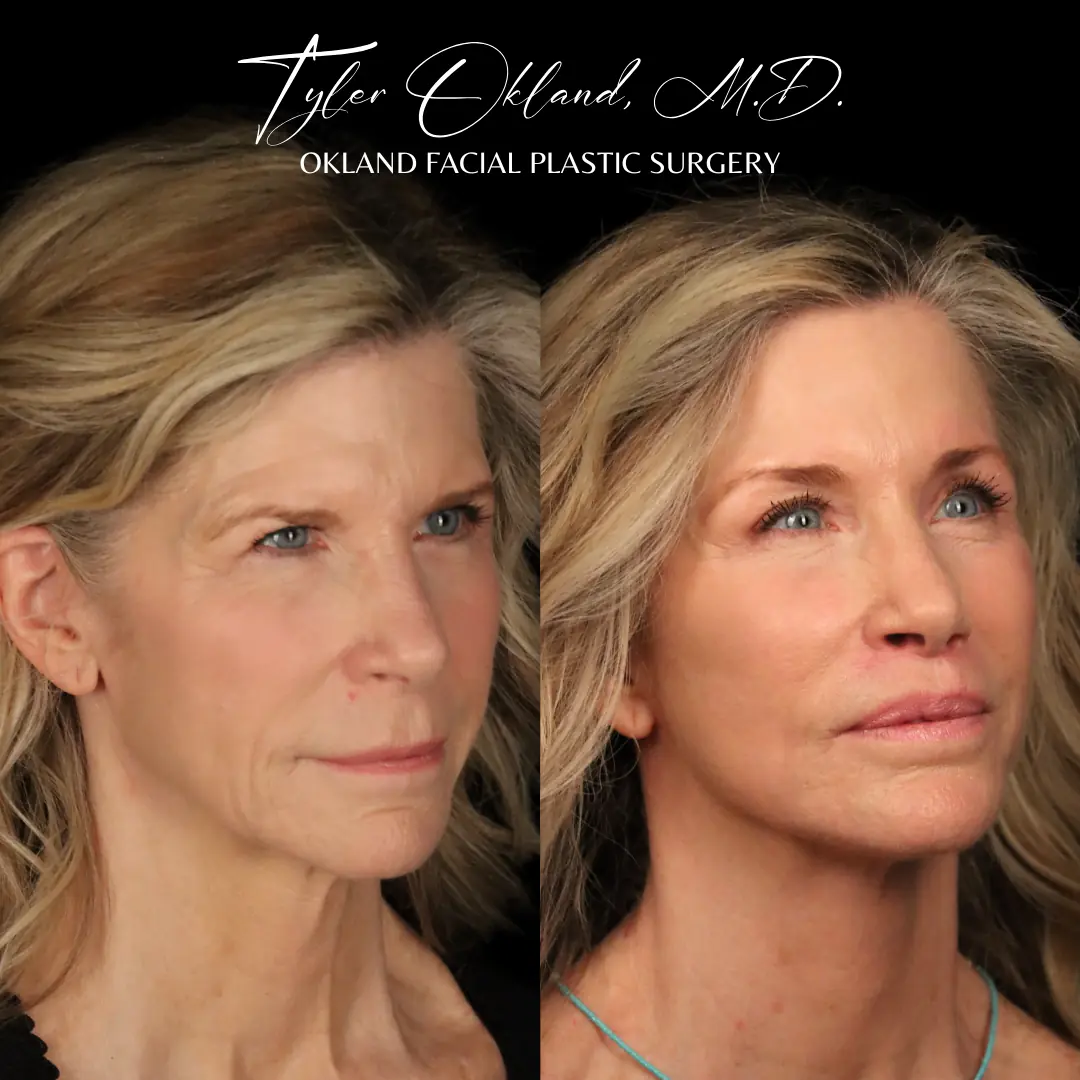

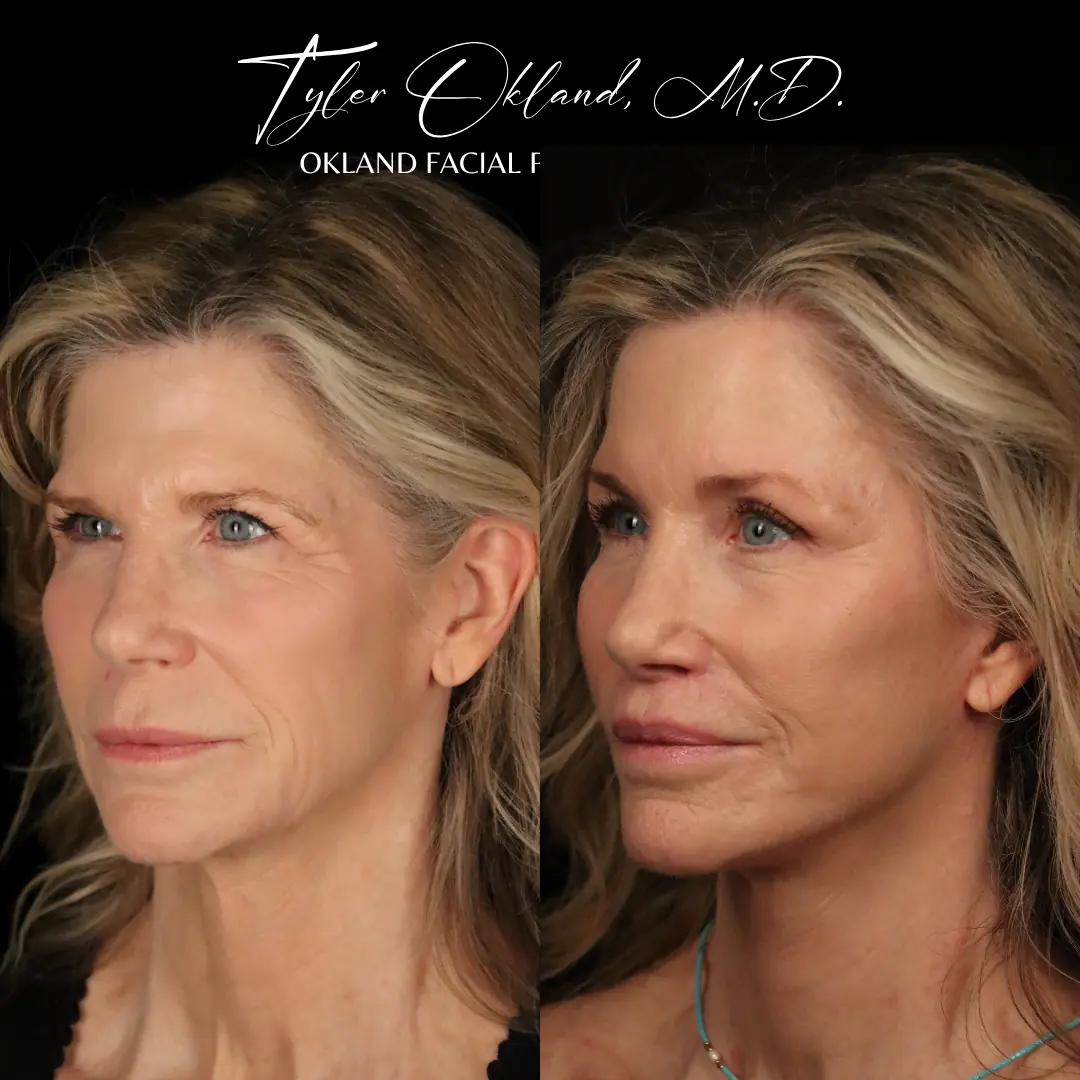
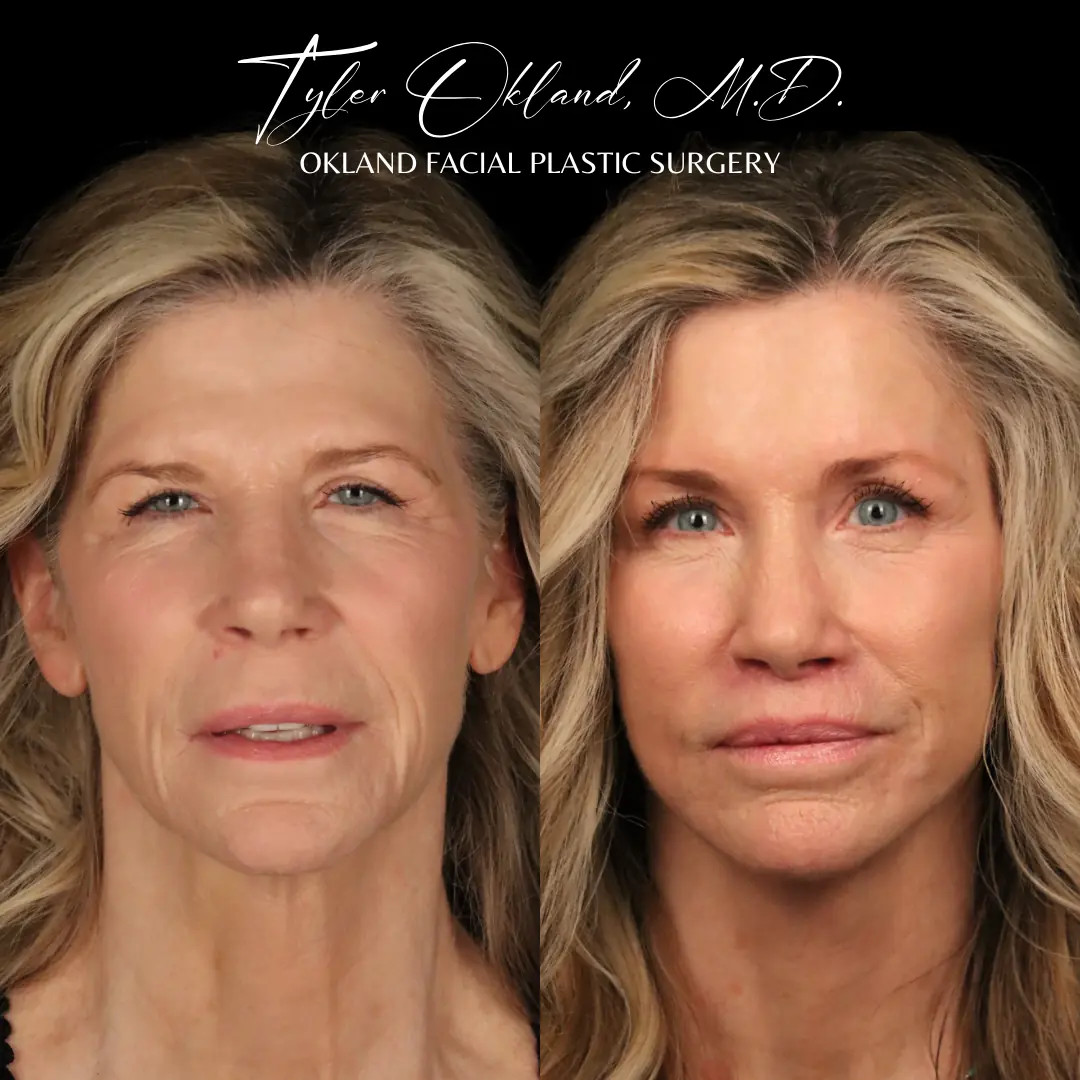
63 year old female 4 months following endoscopic browlift, extended deep plane facelift, lip lift, full face fat transfer.
How Much Does a Lip Lift Cost in Denver?
A standalone lip lift in the operating room is typically around $7,000 in my practice, including surgeon, facility and anesthesia fees. In the vast majority of cases, I add it to a larger operation—most commonly facial rejuvenation—so the combined plan is quoted as a whole.
I believe surgical pricing should be transparent. Patients should understand the expected cost before they come in for a consultation.
Why Choose Dr. Tyler Okland for Lip Lift Surgery?
I am a double board-certified facial plastic and reconstructive surgeon whose practice is limited to surgery of the nose, face and neck. I completed five years of residency training at Stanford followed by facial plastic and reconstructive surgery fellowship training at Vanderbilt.
I do not think of a lip lift as a tiny skin-excision procedure. I think of it as facial architecture. The lip has to fit the nose, teeth, mouth, chin and the rest of the face. My planning starts with what I leave, not what I take. Deep release and small-volume lateral fat transfer are tools I use when they create a better commissure-to-commissure result.
Frequently Asked Questions About Lip Lift
What is a lip lift?
A lip lift shortens and repositions the upper lip through an incision hidden along the nasal base. My technique also releases the deeper soft tissue to improve eversion rather than relying on skin excision alone.
What is a bullhorn lip lift?
“Bullhorn” describes the shape of the subnasal skin excision. It does not tell you how deep the operation goes or how the lip is released.
What is a deep plane lip lift?
A deep plane lip lift releases the upper-lip soft tissue from the orbicularis oris so the lip can move and evert. My release extends toward the vermilion border laterally.
How much lip do you remove?
I plan the opposite way: I decide how much lip I want to leave. My common final range is roughly 12–15 mm centrally and 17–18 mm laterally, then I individualize it to tooth show and facial proportions.
Will a lip lift show more of my upper teeth?
That is often one of the goals. I want youthful upper-tooth display during speech—not excessive dental show.
Should I dissolve lip filler before a lip lift?
If it is hyaluronic-acid filler, generally yes. HA binds water and can distort the lip I am trying to measure while increasing swelling around a precise closure.
Can too much lip filler make the lip look older?
I believe large-volume filler can weigh on an already long upper lip and make it look longer or older. If the problem is position, more volume does not correct the architecture.
Do you add fat during a lip lift?
Often, I add a tiny amount to the outer lip when it improves eversion from oral commissure to oral commissure. The goal is continuity, not an overfilled lip.
What is the biggest risk?
The scar. Most lip-lift scars mature beautifully, but it is a central facial incision and must be taken seriously. If needed after healing, we can use microneedling or CO2 laser resurfacing.
How long is lip lift recovery?
Most patients plan roughly 1–2 weeks for visible recovery. Swelling improves during that period, but the scar and final lip shape continue maturing for months.
Is a lip lift permanent?
The structural shortening is long-lasting. Aging continues, but the removed skin does not regenerate.
Can a lip lift be combined with a facelift?
Yes. I frequently add a lip lift to comprehensive facial rejuvenation when the upper lip has lengthened. Every procedure still has to earn its place.
Can a lip lift be combined with rhinoplasty?
Potentially. The nose and upper lip share one aesthetic frame, so rhinoplasty changes in projection, rotation and the columella have to be considered.
How much does a lip lift cost in Denver?
A standalone lip lift is typically around $7,000 in my operating room, including surgeon, facility and anesthesia fees. Most are added to a larger procedure, so the combined surgical plan is priced as a whole.
Leave the Right Lip. Do Not Just Take Skin.
Done right, a lip lift should restore original anatomy.
The upper lip should be shorter, the red lip more everted and naturally full, the upper teeth easier to see during speech, and the mouth better balanced with the nose and the rest of the face.
SCHEDULE A LIP LIFT CONSULTATION | DENVER, COLORADO